
Reporting on the Own The Future worker co-op accelerator programme for new co-ops

Back in December workers.coop in collaboration with others launched the first known worker co-op accelerator programme in the UK, Own The Future, supporting workers leading the transition to a new economy through the incubation of new or converting worker co-ops.
Own The Future was made possible thanks to funding from the Joseph Rowntree Charitable Trust. To deliver this project the worker co-op federation partnered with Outlandish / Space 4, who brought experience of having previously run a co-op accelerator programme in a London borough, and Tipping Point, who work in the intersection of climate, worker rights and justice.
Own The Future works with five groups on a business accelerator programme over a period of a year, providing training, mentorship, peer support, start-up funding and business support. The aim is to support these groups transform from informal groups with ready-to-go ideas into incorporated worker co-ops who have begun trading.
The programme steering group is made up of Adriana Swain and Clara Paillard (Tipping Point), Natasha Natarajan (Outlandish/Space4), who is leading on the accelerator bit of the programme, Gemma Copeland (Common Knowledge, board of workers.coop), Sean Farmelo (BBF, board of workers.coop), Sam Nordland (workers.coop), and Eva Goudouneix, the project co-ordinator.
Why an accelerator programme?
One of the goals as a federation is to support and develop new worker co-ops, and make the system of worker ownership more accessible to a wider range of people.
At the same time, many of us recognise a role for worker co-operatives in the transition to a less extractive and fairer economy. We are head deep in a climate emergency, and worker co-ops are a possible pathway to more just and ecological forms of economic ‘growth’ that are based on alternative forms of value, and that place importance and care on other things such as worker well-being, community and wider environment.
Worker co-ops don’t just embody deeper commitments to environmental and ecological principles, but moving towards a new economy needs to revolve around an organised workforce who have democratic ownership over what they do and are producing socially useful good and services.
In contrast to the wide support that exists for traditional start up businesses, there is a well-known lack of co-operative specific support. If worker ownership is going to be an answer it’s clear to us that we need to scale up the number of new or converting worker co-ops. We know the skills, experience and know-how to develop more democratically owned businesses for a more circular, and fair economy exist. But there is a missing funding link between the provision of skills and the demand for support.
There are very few co-op business support programmes out there, one of the main ones being Co-operatives UK’s Business Support Programme (funded by the Co-op Bank), but generally speaking co-operative business development is desperately underfunded. When support work is delivered, it’s often for a limited time or limited scope, is temporal or focused around start-up or a particular issue.
For example, this Spring a specialist training programme for co-operative practitioners, the Barefoot co-operative business training, temporarily paused its next cohort due to lack of funding. What’s more, we have yet to see an evidencing of support and packages for the sector from the government’s pledge to double the size of the co-op sector.
The Own The Future programme is made possible because of sustainable future funding from JRCT. A programme of this length and size would always require external funding alongside the activities of the federation, which are themselves resourced through membership income from worker co-ops across Wales, England and Scotland.
How was the accelerator programme designed?
When starting a new business as a worker co-operative, the onus is on individuals or groups to find information, follow steps and work things out, which can be daunting and isolating. Who is able to start a new business is dependent on who has access to resources, free time, money, skills, and able to carry out free work at the beginning to set things up or acquire new skills.
While still a pilot project on a small scale, Own The Future makes a start at addressing these barriers in the way it is designed. Core to the programme is the provision of start-up funding. Each group receives £5,000 start-up funding, which can cover things like new equipment or paying for co-op business support.
There is additional budget to cover costs associated with attending events, often crucial for networking, marketing, peer support and to provide the social aspects like celebration, core to success!
The demographic makeup of each co-op was considered as part of the cohort selection. Thought was given to which trades or activities are less represented in the worker co-op movement, such as tree surgery or childcare, alongside other considerations such as business viability.
There are many benefits to designing the support programme as a longer-term accelerator, where support that co-ops receive is situated within a group setting. A peer learning environment is where people can learn together, share insights and help each other out, based on mutual support and collaboration much like working as part of a co-operative.
Rather than seeing the cohort as five separate groups, the members come together through online meetings where they meet each other, and can share common challenges and solutions, and feel part of something bigger.
In addition, through the federation of worker co-ops, they area linked up to other existing co-op businesses in their field, and have the chance to meet peers working in similar sectors or who have been through their own process of start-up, at events in-person and online.
The abundance of freely available support and advice from well-meaning peers in the sector is one of the factors that makes worker co-ops as a model so strong, and more likely than traditional business models to succeed past the five year mark.

The support takes place over a longer period of one year, making it comprehensive but also allowing it to be iterative and responsive to the groups needs’ and experiences of start-up. This follows the pace of setting up a new business, which often pans out over a longer period of time, with mentorship and development along the way, rather than all at once at the start.
Participants benefit from learning from a range of professionals and organisations, rather than working with one advisor. The groups are assigned a mentor, who are involved in worker co-ops, and take part in training identified as areas of need early on. They also receive specialist training from a range of experts after their needs are identified, with a budget of £1000 to spend on business support. The federation feels like a natural home and a strong base for this type of support programme.
Instead of a one-size-fits all approach, the accelerator has been designed in a way that is tailored, and based on an iterative process where a mentor works with a group and the funding and support is based around that particular groups’ needs, in recognition that different groups will have varying needs on a programme like this.
50+ applications received
When we opened applications in December 2025, we were blown away by the level of demand we received: 50 expressions of interest and dozens of people who attended the drop-in Q&As, and this was just for worker co-ops.
Cohort selection was very challenging because so many of the 26 full applications received met the criteria for a viable or already evidenced business. The final cohort of five groups was selected based on a range of ready-to-go viable ideas, geographical location, sector, and those considered most able to benefit from the type of support the programme is able to offer.
We know the demand for this type of support exists and is desperately needed, and we are excited about the future possibilities of how we can build on this.
Welcoming the participants
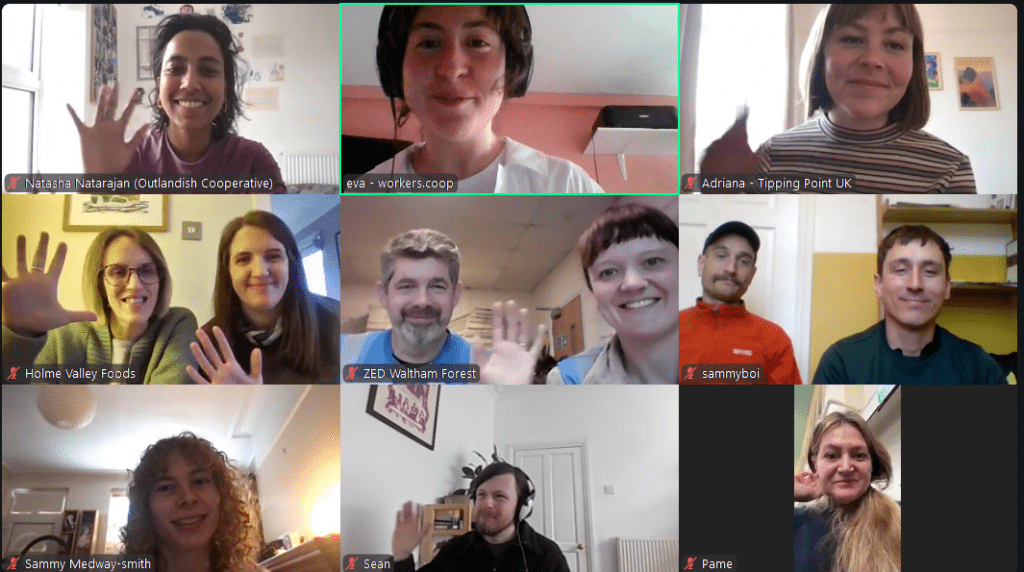
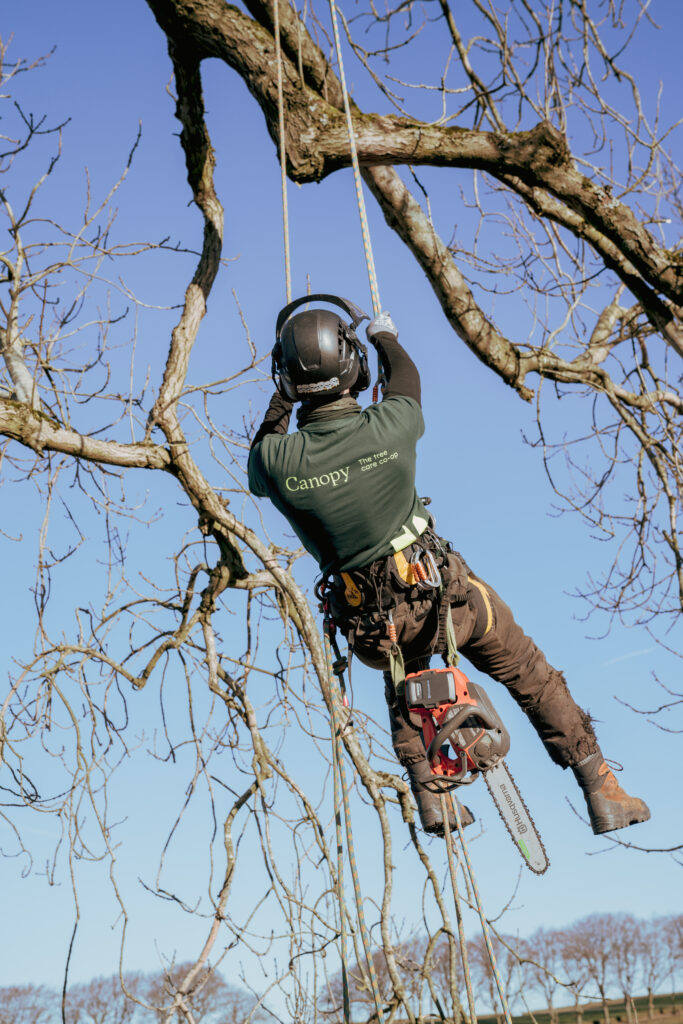
- Canopy Co-op, an ecological tree surgery and forestry group in Sheffield
- Valley Roots, a food distribution hub in West Yorkshire in the Holme Valley
- Nanny Solidarity, a childcare co-op in London
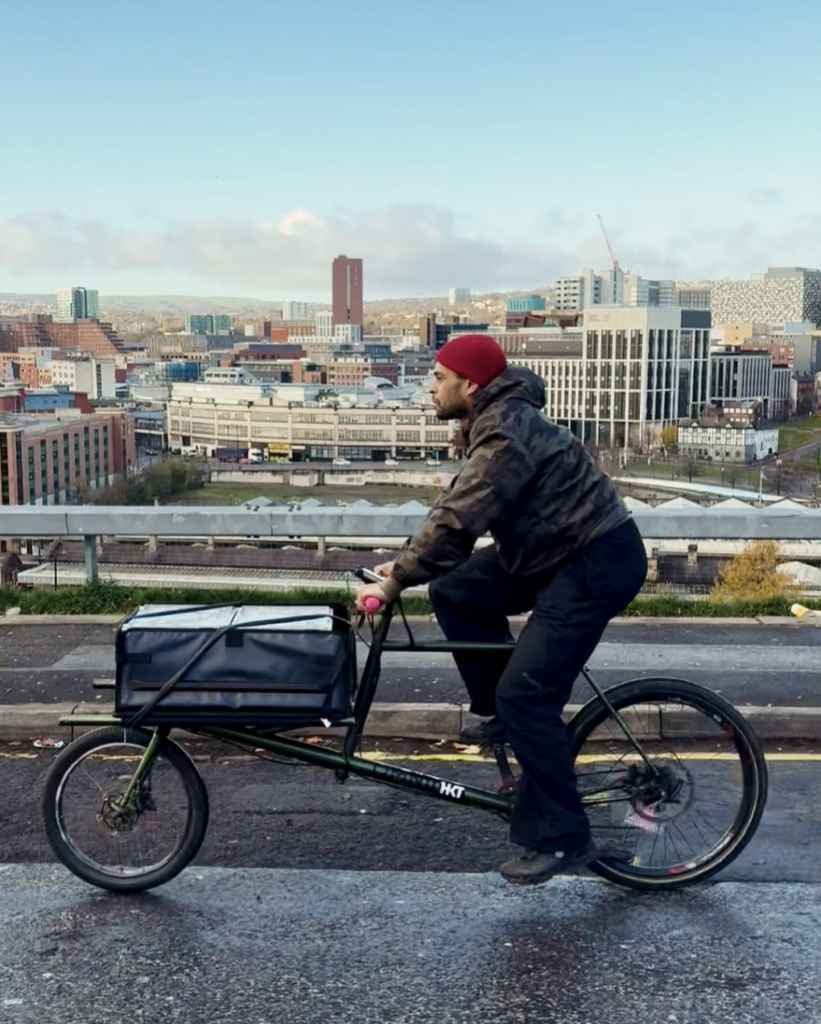
- Feral Express, a queer-owned bike courier in Sheffield
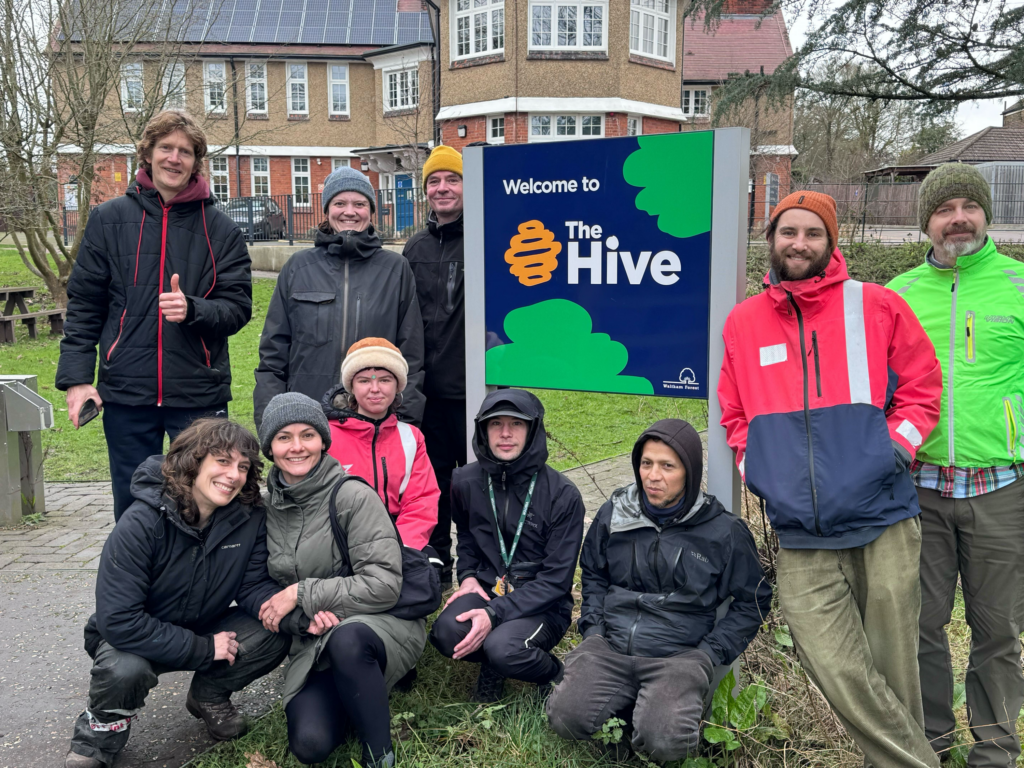
- Zero Emissions Delivery Waltham Forest, a bike delivery service and a conversion, in London
So far, groups have taken part in training sessions on People & Culture and Marketing & Communications, alongside one-to-one sessions with their mentors – Natasha (Outlandish), Adriana (Tipping Point), and Eva (workers.coop). The mentoring sessions help each group clarify their goals and challenges, and figure out the use of their start-up funding and specialist advice budgets.
Each group is progressing in ways that reflect their context: ZED Waltham Forest and Feral Express are researching how other cargo bike couriers operate, Nanny Solidarity Network is developing their internal structure, Canopy Coop are embedding sociocratic processes into their ways of working, and Valley Roots are working on all fronts to get their business up and running – from digital platform to partnerships with high street vendors.
What do we mean by ‘just transition’?
We use the term Just Transition which is a framework imagining and building a different kind of economy. It calls for a shift from an extractive economy – driven by consumerism, resource extraction, exploitation, and concentration of wealth and power – towards a regenerative economy grounded in care, cooperation, and ecological and social wellbeing.
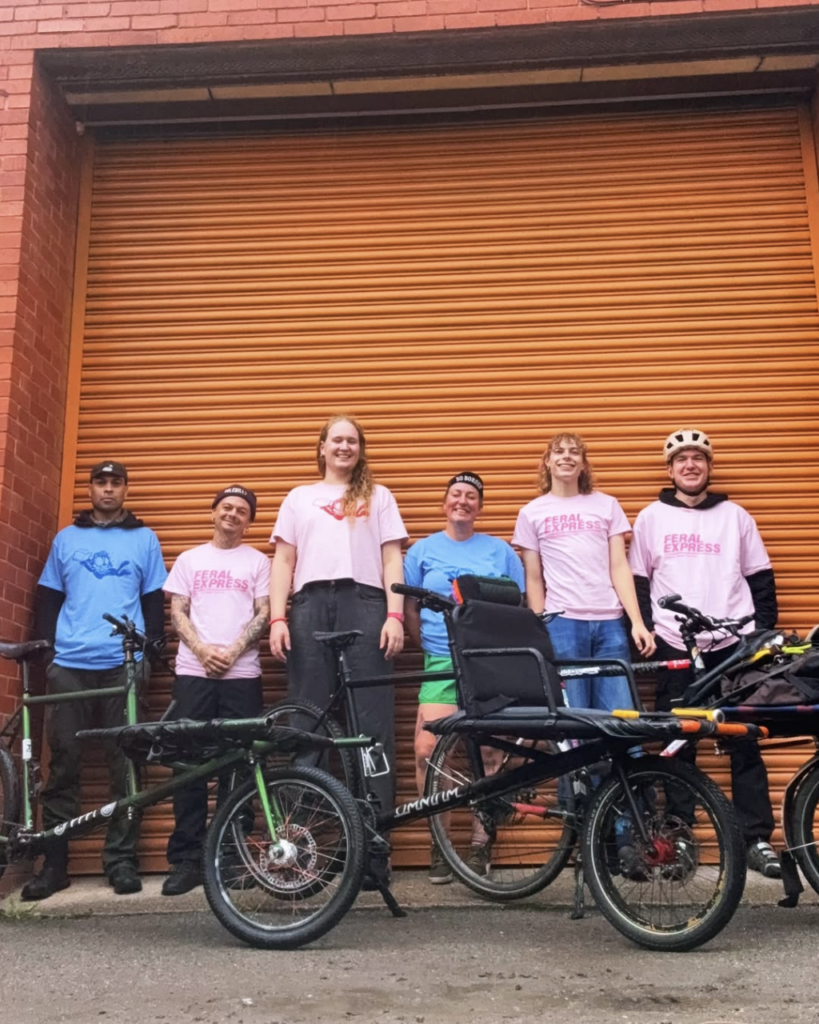
Worker cooperatives can play a major role in this transition because they change who owns and controls economic activity. Decision-making power is taken away from distant shareholders and big corporations, and instead given to workers, who have an interest in addressing the issues caused by the extractive economies we live in – cost of living crisis, low-quality work, lack of public investment, breakdown of social ties and so on.
Worker cooperatives encourage local, circular economic practices, and create high-quality jobs to do work we actually need. They are more resilient in the face of crises, prioritise wellbeing and solidarity, and give a voice and power to those who have been most disadvantaged by the current system.

What’s next?
We are now about half way through the accelerator programme and have just passed the milestone of meeting in person for the first time at Worker Co-op Weekend. The cohort received training in decision-making and sociocracy, putting the theory to use by using the training to make a decision at the end of the weekend.
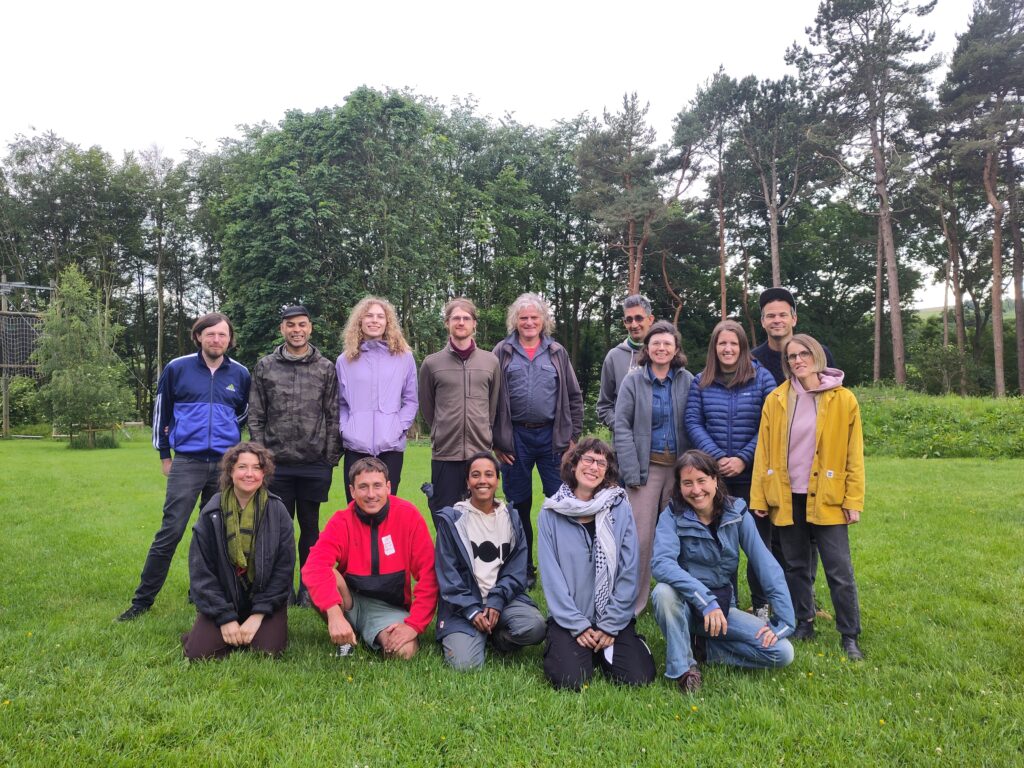
Development looks different for each group as the learning process is iterative and respondant to the groups’ needs, rather than taking a one-size-fits-all approach.
The benefits of the accelerator being embedded within the worker co-op movement is the abundance of advice, shared knowledge & skills, collaborative tools and templates, and generosity; an approach which is open and based on mutual aid and cooperation, rather than competition.
Own The Future is a programme of support for worker co-ops that’s also articulated as a response to the climate crisis and as a way forwards in building the types of economies we want to see, with workers leading the way.
Press inquiries to ownthefuture@workers.coop.
In partnership with: