by Siôn Whellens and Jonny Gordon-Farleigh First published in STIR Magazine #53 / Spring 2026
If the UK government’s £5.8 billion Pride in Place Programme (PiPP) represents a recognition that communities need long-term, patient capital to rebuild their social fabric, it also shines a light on a deeper contradiction at the heart of Britain’s economic model. We can refurbish high streets, repaint community centres, and improve access to green spaces. But if the underlying engine of wealth creation remains externally owned, extractive, vulnerable to relocation, and offers poor employment conditions, we’re just decorating decline.
What’s needed alongside PiPP is a bold structural counterpart that addresses the root causes of decline. We propose a Pride in Work Programme: a ten-year, £5 billion commitment that would retain and expand local industry in areas of deprivation, with a specific focus on achieving this through democratising the ownership of local businesses. By providing significant levels of public finance to support democratic business in the 284 areas due to receive PiPP funding, it would not only support the regeneration of the public realm, but also root the production of essential goods and services in the places that need them.
Such a programme could support the launch of a national democratic ownership fund, the introduction of Right to Buy powers for workers, and funding for pilot initiatives in the care, energy, food, and green manufacturing sectors, which could rewire our economy in favour of workers and communities.
A private island
For decades, Britain’s economic geography has been defined by extractive ownership. Over the past decade, the number of UK companies owned by overseas investors has also grown sharply – rising from about 56,300 in 2015 to approximately 156,000 in 2025, an increase of around 177%, showing a substantial rise in foreign direct ownership of UK firms. Profits flow out of towns and cities as quickly as they are generated. Supermarkets remit dividends to shareholders; care homes are folded into private equity portfolios; logistics warehouses are nodes in global supply chains with no loyalty to the locality that hosts them. We are, as Common Wealth’s recent Who Owns Britain? report suggests, a ‘private island’.
The Centre for Democratic Business and workers.coop federation have long argued that meaningful economic renewal requires a shift in ownership. And for the last decade, new municipal partnerships in places like Islington and Preston have shown that truly effective economic development depends on the local ownership of capital, assets, and enterprise.
Yet these efforts remain marginal and fragmented without national scale – even despite Labour’s commitment to ‘double the size of the co-operative economy’. A Pride in Work programme would provide that scale. Up to £5 billion over ten years would be invested in areas of deprivation to provide workers with the capital to start democratic businesses, buy out retiring or selling owners, and establish public-commons partnerships in productive and essential sectors, like housing, energy, and food markets.
If we’re to protect our remaining industries – and actually expand them – we need to use democratic ownership models to ensure that we are protecting and creating stable and dignified jobs where people actually live.
Anchoring community wealth
Community Wealth Building initiatives, from procurement reform to anchor institution strategies, have shown promise. Councils redirect contracts to local suppliers. Public bodies favour social value. Money circulates longer within a region. But without ownership reform, these initiatives remain fragile.
If local suppliers themselves are externally owned, public procurement becomes a subsidy to extraction. If the care provider is a private equity firm, social value clauses cannot prevent the loss of local wealth. A Pride in Work programme would complement PiPP by ensuring that the enterprises benefitting from local regeneration are themselves locally rooted and democratically governed.
Such a programme would also be more ambitious than the ‘work, productivity, and skills’, and ‘community power’ interventions mentioned in the existing PiPP, and would provide the necessary framework for the capital needs, training, and specialist sectoral knowledge that could reverse the decline in the British economy that has followed the long process of deindustrialisation and the financialisation of business.
What if…?
Failing care businesses were converted into worker- and community-owned care co-operatives.
Essential manufacturing firms were transitioned into employee ownership to retain onshore supply chains.
Inefficient grid systems and inflated energy prices were replaced by local energy public-common partnerships.
It’s proven that democratic firms are more resilient and more likely to reinvest locally, with worker co-operatives and employee buyouts creating and preserving decent jobs when owners lose interest or retire. The Employee Ownership Knowledge Programme, the most comprehensive research initiative ever undertaken to understand the scale, performance, and impact of Employee Ownership Trusts and worker co-operatives, has shown that these businesses hold an 8-12% productivity advantage, are 50% more likely to create jobs, and that lower earners in worker-owned businesses receive, on average, £2,900 more per year than peers in other types of firms.
A Pride in Work programme would be a once-in-a-generation opportunity to transform work in the neighbourhoods that need it most – if the political will can be found.
A decade to transform the economy
As it stands, Pride in Place risks being a form of compensation for the places we expect to continue to be economic losers. For structural change, we need another programme that can reform business ownership and create dignified work within the most deprived communities.
So, what could Pride in Work look like in practice?1
A National Democratic Ownership Fund providing patient capital for buyouts, conversions, restarts, and public-commons partnerships.
Technical assistance hubs to support governance, finance, and sectoral strategy.
Right-to-buy powers for workers when viable businesses are put up for sale.
Preferential procurement for democratically owned firms.
Sectoral pilots in care, energy, food, and green manufacturing.
Crucially, funding should be long-term and predictable, matching the ten-year horizon of Pride in Place.
In an era of decline and economic pessimism, the language of pride is powerful. If Pride in Place acknowledges that communities deserve beauty, safety, and voice, Pride in Work makes the case that democratic ownership of local businesses is essential, too. Together, they can underpin a new political economy that puts communities and workers first.
This long read is a version of the text of Chapter 20 of ‘Cooperation at work: worker-owned cooperatives across the world’, published by Routledge in February 2026. A text based on of Chapter 19 of that book, a political history of worker cooperation in the UK, is shared here.
Abstract
Calverts, a worker cooperative founded in 1977, originated from a worker takeover of a printing and publishing arm of the Institute for Research in Art and Technology (IRAT). Facing initial financial hardship, the seven founders secured loans and support from the National Graphical Association (NGA) union. The cooperative’s early years were marked by modest income and a commitment to eventually paying all members the union minimum wage, which they achieved. Growth followed, accompanied by technological upgrades and relocation. The 1980s saw rapid expansion, but also internal conflict and financial losses, resolved through member solidarity. Calverts adapted to technological shifts in the printing industry, focusing on quality and niche services, which allowed them to thrive even as many competitors failed. The cooperative emphasizes worker welfare, equal pay, and democratic decision-making, fostering a strong sense of community and resilience. Calverts’ success demonstrates the viability and adaptability of worker cooperatives, even within a challenging market, highlighting the benefits of collective ownership and democratic governance.
Calverts was founded in 1977, after an industrial dispute and worker takeover of the printing and publishing arm of the Institute for Research in Art and Technology (IRAT), also known as New Arts Lab.
In spring 1975, IRAT took over the firm J Bellers, a radical press run by Janos Abel, a Hungarian emigre and veteran of the 1956 uprising. IRAT then recruited a small cohort of young workers, including trainees, who joined on the understanding that the combined operation would become a cooperative. Conflict arose between the worker group and the owner-managers as conversion discussions dragged on through the hot summer of 1976. Some of the new recruits were threatened with dismissal in August, leading to a strike.
In September, the worker group of seven met at the North Star pub and decided to form an independent cooperative. Over the following six months they raised USD 2,800 in loan capital from their own savings to buy some of IRAT’s equipment, and took over the lease on its premises, while securing commitments from many of IRAT’s customers and commercial credit from suppliers. A key success was persuading the printing industry’s main craft union, the National Graphical Association (NGA), to admit the workers into membership and lend moral support.
The founders called the new cooperative Calvert’s North Star Press, combining the names of the bar where the cooperative’s founding meetings took place and the title of a prominent Chartist newspaper, while honouring Elizabeth and Giles Calvert, radical printers of the English revolutionary period, whose premises ‘at the sign of the Black Eagle’ were close to the cooperative’s first workshop in Clerkenwell, central London.
Calverts registered legally as a cooperative in May 1977, becoming one of the first worker cooperatives to adopt ICOM’s new model rules after the passing of the 1976 Industrial Common Ownership Act. The cooperative started trading as Calverts in September 1977. The ‘objects’ provision of its legal document read simply: “Calverts’s North Star Press shall be a printing cooperative operating under workers’ control”. The founder members were John Berry, Lorraine Holdstock, Nicola Palmer, Clare Palmer, Carolyn Nevett, Tony Waterhouse and Marilyn Noad. Janos Abel from J Bellers went on to found another printing cooperative, Spiderweb, in 1979.
In the transitional months of trading, the cooperative had almost no working capital. Tony Waterhouse remembers: “I managed to buy a skip load of waste hardboard for USD 2 plus a stack of studding timber. I pulled out and straightened hundreds of nails, then with tape, claw hammer and panel saw, I furnished the workshop with ‘favela’ furniture – I was brought up in Sao Paolo.”
For the first few months, only the two members with children received wages, while workers without wages subsisted on state unemployment and social benefits. However the members made a pact: all of them would receive wages after six months, or the cooperative would close. After twelve months, all of the workers would be paid at least the NGA union minimum rate, on the same condition. Sales turnover in the first full year was just USD 50,000 but those deadlines were met.
Context
In 2009 a former member of Calverts, Jessica Baines, published a wiki website surveying the radical and community printshops in the UK from 1968-1998, called The freedom of the press belongs to those who control the presses. She identified more than 40 enterprises, further categorising them as poster design collectives, service printers, typesetters and print resource centres. Most of them were in London.
In the pre-internet era, these presses and collectives served networks of social, cultural and political activists and organisations by designing and producing the books, pamphlets, posters, newspapers and leaflets which they needed to disseminate propaganda, share information, organise public actions and promote their causes. In London, Calverts was one of six worker cooperative service printers, meaning that it operated on a fully commercial basis.
The outputs of the printing presses and design collectives were often disseminated through ‘movement’ distribution houses and radical bookshops. Almost all of these enterprises operated on democratic and egalitarian lines, although only a minority explicitly adopted the worker cooperative form. More broadly, the worker cooperative milieu in the UK’s capital was big enough to support a regional network called London ICOM, and a small worker cooperative education unit called London Cooperative Training, both of which continued until 1997. The printing and graphic design cooperatives often collaborated and supported each other, despite being in formal competition. In 1986 they formed a short-lived network called London Cooperative Printers Association, working together in areas of mutual interest such as purchasing, sharing commercial intelligence and organising worker exchanges.
The 1980s was a period of general growth in commercial printing, publishing and papermaking, and until the internet boom it remained the UK’s seventh largest industry by number of people employed. An ever-growing market and high prices meant there was plenty of commercial space for the low-tech service cooperatives, but their worker recruits were usually trainees, self-taught people or university graduates without trade skills.
Before 1986 apprenticeships, job entry and continuing employment in the newspaper and general printing sectors were heavily regulated by craft and trade unions at every level. Obtaining a ‘union card’ therefore became a working life goal for individual cooperative members, while union recognition of the cooperative enterprises themselves was a commercial necessity. Over time, unions also became a natural and significant part of the service cooperatives’ customer base. Calverts was an NGA ‘closed shop’ from the start, meaning that all workers were required to join the union. It remained an informal closed shop long after such arrangements were made illegal in 1990. The print unions’ power was gradually suppressed and eventually broken by aggressive employer action in the newspaper industry, combined with a series of anti-union laws passed by Conservative governments between 1980 and 1993.
Early progress
To begin with, Calverts operated with the very basic printing equipment it was able to buy from IRAT, including two small format duplicating machines, a golfball typewriter for setting up columns of type and a chemical transfer plate maker. In 1978, loans from members and a USD 650 loan from ICOF enabled the cooperative to buy a paper guillotine and A3 format litho printing press. In 1982 the cooperative bought its first A3 format premium quality press, and a photographic print-down frame for making metal printing plates.
In the first five years, turnover grew by an average of 35% year-on-year. The cooperative expanded to eight members, and in 1983 it borrowed USD 22,000 in asset finance from a private bank to buy its first ‘commercial industry standard’ A2 format press, and a phototypesetting machine. Careful financial management meant that the cooperative was able to slowly raise real wages, although on paper its liquid assets, balance sheet and solvency all stayed negative until 1984.
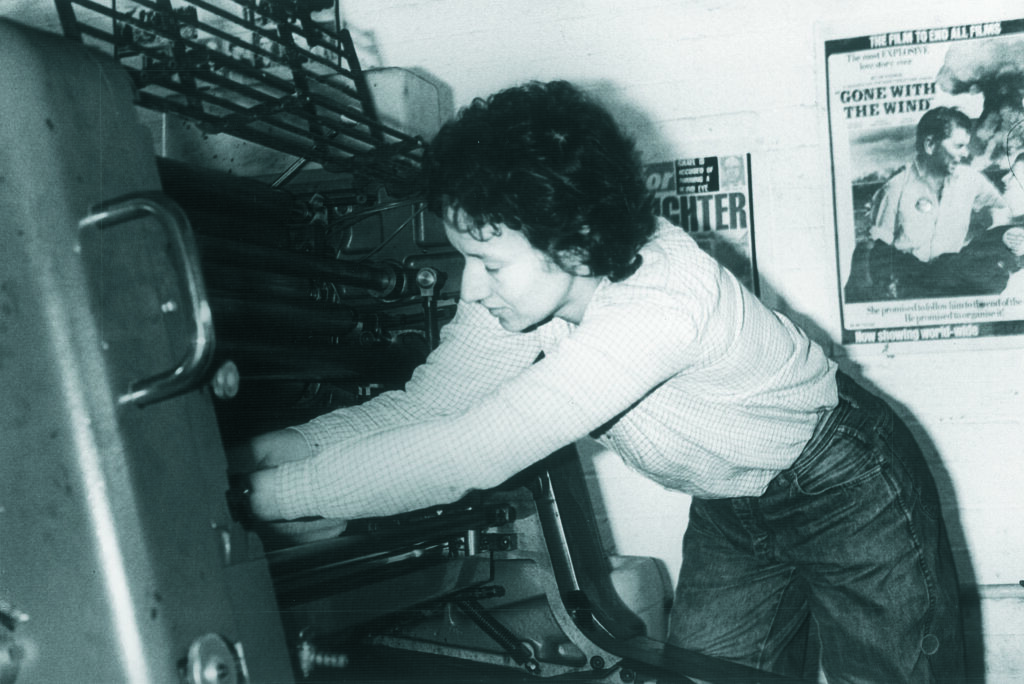
Nicola Palmer on the Heidelberg SORK A2 litho press, c1984
Although Calverts worker cohort changed quickly in the early years – by 1985, none of the founders remained – the cooperative established a number of key policies and approaches which were to underpin its cohesion and growth over the first decade.
Firstly, it established a standard working week of 35 hours and equal hourly pay across all job functions, which it maintains to this day. Calverts cleaner receives the same hourly rate as the finance director.
Second, it applied a policy of ‘one worker, one job’ such that members were not allowed to take additional employment outside the cooperative, without a special agreement.
Third, all overtime was paid at a premium rate or worked as ‘time in lieu’, and carefully monitored with a view to increasing the number of full time positions, rather than increasing the amount of paid hours per worker.
Fourth, it applied strong financial controls, with collective decision making, detailed management accounts discussed each month, and full transparency on other management and commercial matters.
Fifth, it resolved to charge all customers its full commercial cost recovery rates plus a profit margin, with an element of flexibility – while permitting and encouraging members to use the production resources of the cooperative in their free time, to produce design and print outputs for the bare cost of the materials. A condition of this ‘home industry’ was that the product should be ‘not for profit’, and each project consented to by the members’ meeting.
Sixth, although workers were recruited for specific roles, the cooperative encouraged skill sharing and flexibility across job functions. This meant that worker-members were able to develop new aptitudes and capacities, and the cooperative could produce efficiently.
Seventh, it determined to raise regular wages whenever possible, rather than distributing a part of surpluses in member bonuses, and committed to improving long-term productivity by reinvesting in technology instead of taking short-term gains as returns.
All these policies and practices are in place nearly 50 years later, with the exception of the ‘one worker one job’ rule as more workers are now part time, and the cost of living in one of the world’s most expensive cities has increased exponentially.
As Calverts gradually evolved from a low-cost, low-tech print shop to a professional provider of creative and production services, the level of skills required in each job position meant it increasingly needed to recruit skilled workers in design, reprographics, printing technology, marketing or commercial administration. Yet today, most of Calverts members can work across more than one traditional job function, or take on a cooperative governance role. Over the years, many members have taken advantage of Calverts positive approach to internal cross-training or subsidised external learning, to develop new skills and work in different areas of the business.
Crisis, recovery and innovation
In 1985, Calverts outgrew its Clerkenwell workshop, and the cooperative signed a 10 year lease on a 600m2 factory and studio space over two floors of a former garment factory in the Shoreditch district, 5km to the east. At that time, Shoreditch was an unfashionable working class neighbourhood, home to a young Bangladeshi migrant population that was gradually replacing the traditional Jewish community.
The move exhausted the cooperative’s cash reserve, but trading continued to expand quickly. In 1986 the cooperative bought a two-colour 52cm x 72cm format printing press, again financed by a private bank loan secured on the asset. Between 1984 and 1989, year-on-year turnover increased by an average of 26% reaching USD 820,000. The number of worker-members reached 20. But the pace of growth was creating serious stresses.
By 1988, the office team coordinating production, finance and sales were mainly newer recruits from outside the printing industry, while the ‘factory floor’ team group now included a number of older workers with more traditional attitudes to skills demarcation and the role of managers. Efficiency and profitability declined. Despite high turnover growth, the cooperative incurred heavy trading losses in 1987-88. The tension resulted in conflict and disagreements among the members, and in 1989 the whole ‘front of house’ group – with the exception of its newest young recruit – resigned at the same time.
The remaining workers immediately reorganised to cover coordination, administration and sales functions, and a founder member returned in a financial firefighting role. The firm was technically insolvent, and Nicola Palmer remembers spending much of 1990 persuading creditors to wait longer for their money, rather than trigger a forced shutdown. The cooperative’s original spirit of solidarity revived, and trading losses stopped – but business continued to be difficult, with an economic recession in 1992 bringing a further loss of trading volume and pressure on prices.
By 1994, the cooperative was able to make new investments in imaging technology and an advanced management information system. Productivity improved, and the business returned to growth, with membership stabilising at around 14 workers. It is worth noting that there were no forced worker redundancies at any point in the crisis and rebuilding period – or indeed, at any time in Calverts history.
In 1998 Calverts bought its first four-colour printing press, a 20 year old second-hand machine. At this point, most of Calverts production was still relatively simple black-and-white or ‘spot’ colour work such as newsletters, magazines, reports, stationery and leaflets. The clients were mainly associations, campaigns, small businesses, universities and charities. The printing presses were already well-used when Calverts bought them, but there was now a culture of workers pushing their skills and the equipment to their limits, to be able to produce better and more challenging work for clients in the arts, creative and marketing sectors. The members decided on a ‘quality strategy’, investing first in the newest and best design, reprographic and platemaking technology, and then in a brand new, state-of-the-art, five-colour press.
Leaving the twentieth century
By 2000, Shoreditch was becoming a gentrified district, and rents were rising quickly. The cooperative made another expensive move, again a few kilometres further east. At the same time, it took out an USD 0.8 million loan to buy the new multicolour litho printing machine. The decisive ‘move to quality’ was underway – exactly in a period when London’s general printing trade was declining.
By the first decade of the new century, digital applications were quickly eroding demand for books, magazines, newsletters, business stationery, directories and advertising-based print. Calverts responded by competing on quality and bespoke service, rather than chasing business on price alone, and by electing not to diversify into purely digital services – although the studio team innovated in branding and graphic design for web applications. As a result, the cooperative was able to build a strong reputation in the demanding market for arts publishing and premium print, and thus able to maintain good jobs, innovate and endure while hundreds of other UK small printing companies disappeared, with much of the reduced total volume of demand now being met by suppliers in lower cost European and Far Eastern countries.
Calverts reached its highest headline turnover in 2008, at USD 1.85 million. With the exception of the years after the 2009 economic crisis and the 2020 Covid emergency, it has tended towards an equilibrium of business volume and employment since that time, while focusing on raising the level of gross surplus by specialising in higher added value print consulting, creative and reprographic services. After 2010, it also began to establish a new and profitable line in digital printing – enabling the cooperative to provide affordable premium print in small editions – and added wide format inkjet and Risograph printing to its traditional lithographic offer.
During the 1990s, when cooperatives were widely seen in the UK as old-fashioned and inefficient, Calverts did not prominently advertise its cooperative identity as a ‘unique selling point’. However after the formation of Cooperatives UK in 2001, it began to reach out to the wider cooperative movement as a potential source of new business, and a focus on cooperative identity and intertrading became key elements of the cooperative’s marketing effort. Cooperatives UK itself became a client, and by 2014 other cooperatives – large and small, in the UK and abroad – made up one of Calverts’ most important client segments. At different times, Calverts members also served on the Worker Cooperative Council, the trustee committee of ICOF, and the boards of Cooperatives UK, CECOP and CICOPA.
In 2012, Calverts won a worldwide tender from the International Cooperative Alliance to research, design and produce a new global cooperative symbol, and to create a fresh visual brand architecture for the ICA itself. It designed a 22-question survey in three languages, inviting cooperators to articulate their interpretation of cooperative identity, and share symbols of cooperation from their own cultures. Detailed survey responses were received from more than 1,000 participants in 93 countries, and the resulting synthesis and design – known as the global coop marque – was launched at the ICA’s 2013 congress in Cape Town. The marque was freely and successfully adopted by small and large primary cooperatives, federations and cooperative support organisations around the world, and it remains a powerful unifying symbol of the movement.
Democratic innovation and worker welfare
It is sometimes said that in cooperatives, most business failures can be blamed on failures of cooperative governance. According to CICOPA’s World Declaration on Worker Cooperatives, worker cooperatives should “practice democracy in the decisive instances of the organisation and in all the stages of the management process”. In common with a number of other UK worker cooperatives, Calverts has radically interpreted this principle by suppressing executive management as a status or special role, while devolving day-to-day decision making responsibility to team groups and individual members. Information sharing and one-to-one conversations are seen as integral to the cooperative’s governance culture, to the extent that the cooperative planned its common spaces to maximise the opportunities for ‘water cooler’ interactions between staff. Only general level matters are reserved for collective meetings, where the majority of decisions are made using a consensus or consent-based process. Voting is sometimes used where it is required by legal statute, or to resolve non-critical but time sensitive matters.
This approach, which recognises governance as a ‘complex responsive process’, allows the greatest intelligence of the members – individually and collectively – to bear on heavy and complex questions, and mitigates the risk of value-destroying ‘strategic’ decision making by poorly-informed executives, whose base function in most firms is to enforce vertical organisational discipline. Perhaps counter-intuitively, it also minimises the amount of time members spend in unproductive meetings. Unquestionably, it produces better and more timely business decisions.
At the ‘shop floor’ level, the need for good communication and efficiency makes each working day an exercise in collective enquiry. Are we wasting time or energy? How is our work allocated and coordinated? Are we using appropriate technologies? Do we have the right feedback processes? Do we have truly equitable working relationships? This produces an intolerance of divisions between workers based on characteristics such as gender, ethnicity, belief, sociological class background or educational attainment, which undermine solidarity and often appear in hierarchical organisations as a tool to ‘divide and rule’. The push towards equality also helps to break down the separation between ‘blue collar’ and ‘white collar’ workers, ‘manual’ and ‘intellectual’ work, and so on. We might say that equality, diversity and inclusion (EDI) is more a product of Calverts’ cooperative habitus, than the product of a human resources policy.
An efficient cooperative working culture liberates the value in time and money that makes decent jobs possible. Calverts standard working week is two hours less than the average for full time workers in the UK, and paid holidays one week more. Hourly pay is around the median average for all Londoners, but 25% higher than the average UK rate for experienced print workers. Other worker rights include paid emergency and bereavement leave, variable working arrangements, unpaid sabbatical leave and insurance-based income protection in the case of a serious accident or long-term sickness – none of which are generally offered in the industry.
A secondary effect of these policies are a low rate of staff turnover with high skills retention. The current average employment duration is 16 years. This in turn underpins business durability and a relatively high rate of return on capital employed.
The question of capital
Lack of access to capital is a historic barrier to the growth of worker cooperatives in the UK, as elsewhere, although as the Calverts example shows this has not prevented groups of determined workers from starting or assuming control of enterprises – even in industries where some cash to purchase fixed assets is needed, to supplement the ‘sweat equity’ of the members.
Calverts has historically chosen to raise investment money through debt, rather than through equity or by seeking non-repayable grants. It could be said that the members had no choice, since the UK had no cooperative investment institutions, and the members themselves had small savings. After all, capitalism is a social relationship, in which being a ‘person without capital’ is almost the definition of a worker. So in the early years, once the members had grasped the capitalist freedom of limited personal liability, debt was seen as perfectly acceptable, even at a high rate of interest. Why would we use our own money, if we can borrow from a bank? If we can make the repayments, we’ll be OK. If we can’t make the repayments, we just walk away.
Later generations of UK worker cooperators are noticeably more cautious about debt, perhaps because so many young people are saddled with the obligation to repay large personal student loans. Until 1990, university education in the UK was free, and in the 1970s most students also qualified for maintenance grants from the state.
When Calverts borrowed money from private banks to buy printing presses, it was always under an asset finance agreement, where the equipment itself was the security on the loan – rather like a house purchase mortgage. When Calverts borrowed from ICOF, the lender obtained its security by taking a ‘floating charge’ on the cooperative’s assets. In general, the members did not provide personal guarantees, but when this was unavoidable – for instance, when a landlord required personal guarantors for a long lease – two members with the smallest personal assets volunteered to be the guarantors, and the other members signed a legal agreement to indemnify the two if everything went wrong.
Under its original ‘common ownership’ statute, Calverts members’ financial participation was limited to £1 each, and only workers could be members. In 2023, this was changed to allow members to take additional non-voting shares, and also to create a new category of external investor members, with strict limits on share interest and voting rights. In the future, this might be an avenue for raising investment cash from key customers or supporters, but it would be a big change.
“At our bi-weekly meetings everyone is welcome to speak – and can speak. There is healthy debate when we need to make decisions, and I feel everyone has equal voice. In other places, I’ve witnessed a culture of deference to managers. In Calverts, you have to persuade your colleagues with sound reasoning, to advance an argument in favour of a particular course of action, which is a good skill. I haven’t been here as long as most other members but I feel I can trust their collective judgement and experience. In other companies where I’ve worked, there has been a lot of ‘smoke and mirrors’ – you have no idea how well or badly the company is doing, until one day a manager comes in and informs you that there will be 50% redundancies. At Calverts, you can all see the waves coming from a long way off, which gives you time and space to respond”. Katie Sheppard (worker since February 2023, member since December 2023).
Impacts
Beyond providing secure, high quality jobs, to evaluate Calverts impacts locally and generally it is necessary to return to its objectives as a business, and see how these have played out for its intersecting communities of place and interest.
Creative services and the printing industry are both vertically segmented and horizontally networked. Design and print firms often operate in complex supply chains, with powerful clients and their agencies at the top, and sometimes characterised by corrupt and exploitative business practices. Calverts aims to influence the field by extending the principle of equity to its business relationships, cultivating transparent and ethical partnerships with both customers and suppliers.
The cooperative is dependent on a network of smaller, mainly local firms providing specialist print and business services as well as freelance workers and larger suppliers. It nurtures its base of suppliers and subcontractors as carefully as it looks after its clients, and some of its trading relationships go back to its beginnings. It has never defaulted on a contract, and in evidence of the trust built up over time, is one of a very small number of firms in a volatile industry to have an extended commercial line of credit with major suppliers.
The ethical roots of the cooperative’s approach to environmental responsibility lie in an original concern to protect the health and wellbeing of its own workers, and the demands of the social and ecology movements Calverts serves, including organisations such as the Green Party and Friends of the Earth as well as many grass roots and local environmental campaigns.
In the 1980s, Calverts collaborated with the worker cooperative Paperback to develop and test some of the first 100% recycled graphical printing papers, and lobbied suppliers to accelerate the development of vegetable oil based inks and non-toxic cleaning chemicals that are now in standard use. More recently, it helped design and promote circular economy initiatives in collaboration with organisations such as the Royal Society of Arts and Manufacturing. Calverts is now a UK industry leader in environmentally responsible print. It maintains Forest Stewardship Council (FSC®) certification, and works under a rigorous environmental management system with ISO14001 accreditation.
In the field of employment practice, Calverts advertised employment opportunities in the womens’, gay and ethnic minority press, recruiting and training people who would have normally been excluded from the industry or restricted to lower-paid jobs, and bringing female and migrant workers into machine printing and reprographic technician roles. In the 1980s, Calverts trained perhaps half of all the UK’s female large format printing press operators.
Calverts members, like most workers in London, live, work and play across different neighbourhoods of the city and its suburbs, and is not easy to measure the local impacts of a small business operating in a large metropolitan region and capitalist centre like London – or even in its local municipality Tower Hamlets, which has a population of 320,000. Scored on indices of social deprivation such as overcrowding and ill health, Tower Hamlets is one of the UK’s poorest boroughs; but by average in-work income it is one of its richest, because the statistic is skewed by very high salaries in the financial district of Canary Wharf.
The cooperative contributes to equitable economic development by supporting organisations such as the East End Trades Guild, a cooperative of artisans and small traders, and by participating in local cooperative development networks. It also provides some free or low-cost services to local non-profit projects, cultural groups and campaigns, including a womens’ literacy project, a food cooperative and an infants’ school. Another contribution is raising awareness of the cooperative model among arts and creative industries students, who graduate into a precarious and exploitative jobs market from London’s universities at the rate of 50,000 every year. Calverts members have mentored or advised a number of creative and digital technology worker cooperative startups.
Conclusion
It has been axiomatic for Calverts that it should invest in its people and technology, rather than diverting resources into non-core activities – such as, for instance, owning its own building. But the real cost of rented commercial space in inner London has risen steeply since 1985, driving traditional manufacturing firms out of the city or out of business altogether.
In 2021, Calverts nearly became homeless because its landlord, attracted by the prospect of letting his property on a premium rent to a ‘just in time’ food delivery company, refused to renew the cooperative’s lease at short notice. Even if the cooperative could afford a forced relocation for the fourth time, London’s main electrical infrastructure provider would not be able to install a power supply, sufficient for the large presses, for at least 12 months. A new lease was eventually negotiated, with a 70% rent increase to USD 140,000 per year. Although Calverts has no extractive owners, it has handed large amounts of money over the years to rentiers and private investment bankers, as well as needing to finance periodic relocation costs.
No small business is immune to seismic changes in the economic landscape. It is not possible to fully plan for the social and political shocks that might affect Calverts future. A strong local and global network of worker-directed enterprises, responsive to the communities in which they trade and operate, is essential to growing the cooperative economy and securing a better future for workers everywhere. Beyond this, how does a single worker cooperative build resilience?
Calverts’ experience demonstrates that organic growth, collective purpose and responding dynamically to changes in the composition of the economy and to political challenges, is more likely to deliver for present and future members than any top-down grand strategy. If the cooperative keeps sight of its principles and purpose, and ‘all other things being equal’, Calverts can be confident in its capacity to keep evolving, to keep serving the needs and aspirations of its members, whoever they are, for years to come.
Calverts premises at The Oval, Bethnal Green, London in 2024
Marking the 2025 International Year of Cooperatives and the third year of the workers.coop federation, we are sharing this long-view interpretation of worker co-ops in this country, the first since since Jenny Thornley’s Workers’ Cooperatives: Jobs and Dreams in 1981.
A slightly shorter version of this piece forms the UK context chapter of a global survey of worker cooperatives, published by Routledge in February 2026, called Cooperativism at Work – Worker-owned cooperatives across the world. The book is available in softback, hardback and e-pub formats here. It also contains an extended case study chapter on Calverts, which you can find here.
Abstract
This article details the history of worker cooperatives in the UK, beginning with the Fenwick Weavers’ Society (1761), the world’s first documented cooperative having cooperativised labour. It traces the development of worker cooperatives through various periods, including their rise and fall in the 19th and early 20th centuries, influenced by factors such as economic crises, political movements (Chartism, the Labour movement), and government policies. The chapter highlights key organisations like the Cooperative Productive Federation (CPF), the Industrial Common Ownership Movement (ICOM), and the Cooperative Development Agency (CDA). It also discusses the merger of ICOM and the Cooperative Union to form Cooperatives UK and the subsequent creation of workers.coop in 2023, a new federation aiming to revitalize and expand worker cooperatives. The chapter contrasts the UK’s approach to worker cooperatives with other countries, noting the tax advantages given to Employee Ownership Trusts (EOTs) but not to worker cooperatives. Finally, the chapter emphasizes the UK worker cooperative movement’s ongoing commitment to international collaboration through organisations like CECOP and CICOPA.
The Fenwick Weavers’ Society in Ayrshire, Scotland, is the first association in the world to cooperativise labour for which there is complete documentation. It can be considered as a proto-worker cooperative. The Society was founded in 1761, in the first phase of the industrial revolution, to enable handloom weavers to support each other, share equipment, co-purchase raw materials, resist pressure on their incomes from agents and manufacturers, and defend standards of production. The society subsequently expanded into workers’ education, a food cooperative, and basic financial services, and it operated for more than 100 years. Other early cooperative initiatives, for which there are fewer primary document sources, included flour mills and a bakery, built and operated by dockyard workers in Chatham, Kent from the 1760’s.
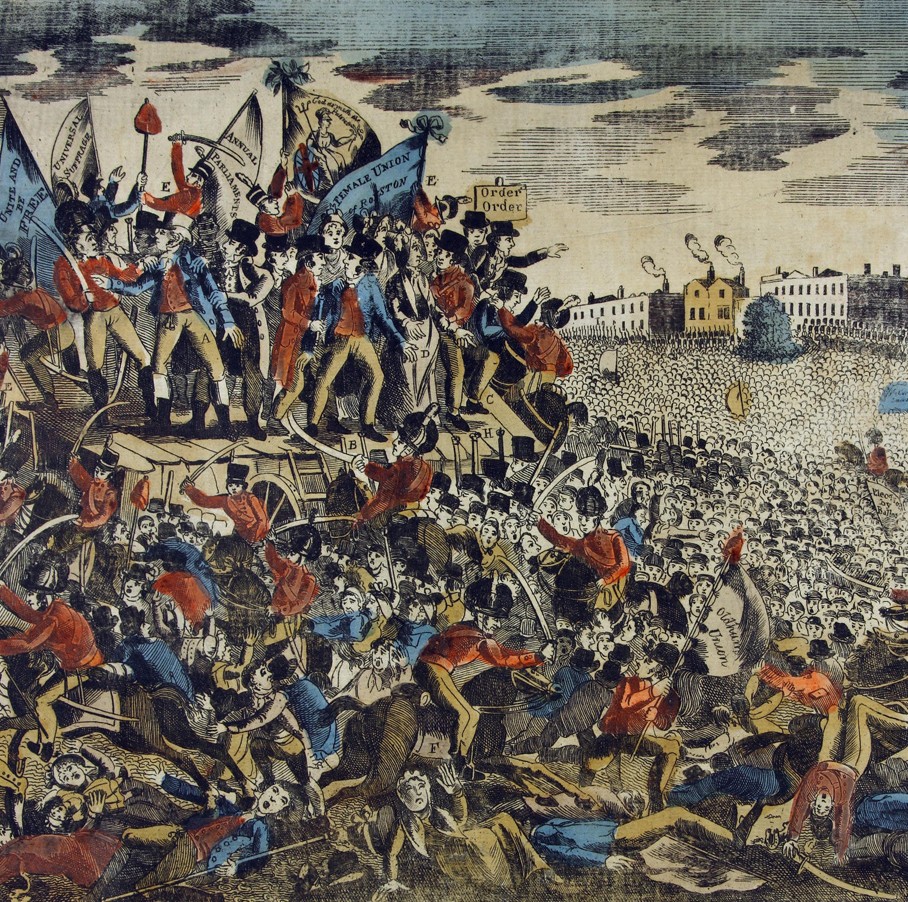
In the first half of the nineteenth century, textile and other skilled workers were at the forefront of struggles over political and economic conditions. Demonstrations of working class discontent were met with legal repression and violence, including the execution or penal transportation of participants in the Luddite movement of 1811-1816, and the Peterloo massacre of peaceful demonstrators in Manchester in 1819. The Chartists, a mass movement for working class political enfranchisement, failed to achieve its goals. Frequent industrial crises gave rise to widespread distress and mass unemployment. This is the background to the formation of the Rochdale Equitable Pioneers Society in 1844, and the spread of worker cooperation in Britain during the nineteenth century – taking the form of both workers’ unions and worker cooperatives.
The Rochdale Pioneers are sometimes claimed as a ‘proto consumer cooperative’, but the society’s original objects included setting up factories and workshops “for the employment of such members as may be without employment, or who may be suffering in consequence of repeated reductions in their wages.” While store-keeping became the most commercially successful activity of the ‘Rochdale model’ cooperatives that spread rapidly after 1844, there were also collaborations and investments in cooperatives such as the Hebden Bridge Fustian Manufacturing Society, which paid returns to both worker-members and cooperative society investors.
In response to local economic problems and crises of unemployment, trade unionists and organised workers set up dozens of cooperatives – known as ‘productive societies’ – in skilled trades such as building, garment manufacturing, printing, woollen, footwear, iron and engineering trades, mainly scattered throughout Northern England, the Midlands and the industrial central belt of Scotland. Many of them were short-lived, suffering from lack of access to capital or credit, and fierce competition. After 1863, the Co-operative Wholesale Society began to set up its own, vertically integrated production facilities – sometimes in competition with the worker cooperatives.
The Co-operative Productive Federation (CPF) was founded in 1882. CPF’s aims were to promote unity of action among the members, find markets for their products, and secure capital for growth and development. By 1893, it had 113 members. However, by the end of the nineteenth century, worker cooperatives had already begun to decline as a mode of independent worker organising. Politically respectable and legally recognised trade unions and retail societies distanced themselves or became openly hostile to the ideas of worker ownership and control. Beatrice Webb, a powerful voice in the social democratic and cooperative movements, wrote against producer cooperatives. In 1923 there were 44 societies in membership of the CPF, and after that it continued to diminish in size and influence. By 1970 only a few remained, mainly in the clothing, footwear and printing industries of the East Midlands. Many of these surviving productive societies had been trading for more than 50 years.
In 1917, the UK’s consumer cooperatives formed a parliamentary political party to defend their commercial interests. In 1927, the Cooperative Party entered into a permanent alliance with the Labour – the UK’s main social democratic parliamentary party – and the exclusion of worker cooperatives from mainstream labour movement thinking was complete. This defined the political context until a revival of interest in worker cooperatives in the second half of the 20th century.
Independently of cooperative movement representative bodies, there existed a few independent employee-owned businesses in the UK, mostly transferred to the workforce by philanthropic owners who wanted to create more equitable business structures. Prominent among these was the retailing chain John Lewis Partnership, which described itself as ‘the UK’s largest employee cooperative’ in its Annual Report until as late as 2004 – although it was never a member of a cooperative federation. Another was the chemicals manufacturer Scott Bader Ltd, founded by the radical pacifist and Quaker entrepreneur Ernest Bader. In 1958, Bader co-founded a network called the Society for the Democratic Integration of Industry (Demintry). By 1963, Bader had completed the transfer of his company to its 260 employees.
In 1971, Demintry transformed into the Industrial Common Ownership Movement (ICOM). Five of ICOM’s ten founding members, including Scott Bader, were located in the historically important east Midlands region. Nevertheless, the founders of ICOM chose not to make common cause with the old CPF, which they perceived to be moribund. ICOM’s founders became committed to a relatively radical form of exclusive and indivisible worker ownership – another ground of difference with the CPF, whose model permitted external investor shareholdings.
A wider rediscovery of the worker cooperative system, starting in the late 1960s and early 1970s, was associated with a general rise in working class confidence and real wages. This was a period of political and economic contestation, with new worker cooperatives energised by the goals of rising social movements and currents such as ecology, libertarian socialism, feminism and anti-imperialism.
In 1973, to mitigate the common problem of access to capital for new worker cooperatives, ICOM initiated a revolving loan fund called Industrial Common Ownership Finance (ICOF). The Fund borrowed from existing cooperatives such as Scott Bader and from supporters, and lent out relatively small amounts to the worker cooperatives, on easier terms than mainstream commercial banks. The fund continues to operate today, as Cooperative and Community Finance.
In response to a wave of unionised worker militancy, including a national coal miner’s strike in 1973, the Labour government of Harold Wilson began to examine the conversion of firms to the worker cooperative form as a potential way to bolster business resilience and secure industrial peace. ICOM lobbied in favour of support for emerging grass roots cooperatives, but instead the government decided on large buyout investments in three troubled private businesses – Kirby Manufacturing, Scottish Daily News and Triumph Motorcycles – on condition of conversion to different degrees of worker participation and nominal ownership . These ‘top down’ experiments were unsuccessful, and all three businesses failed, although Triumph struggled on until 1983. For the next thirty years, critics of worker cooperatives would use the example of these state-sponsored failures to ‘prove’ the unviability of the model.
A high point for the workers’ control movement in the 1970s was the Lucas Plan of 1976. Union shop stewards at Lucas Aerospace published an Alternative Plan for the future of their company, in response to its announcement that thousands of jobs were to be cut to enable industrial restructuring in the face of technological change and international competition. The workers’ combine argued for their right to develop socially useful, non military products, drawing on the tacit expertise of the workforce to propose up to 150 new manufacturing lines. Lucas management rejected the proposals outright, and the Plan was never implemented. But the Lucas workers’ initiative’ vision has provided inspiration to worker cooperators over the intervening decades. The New Lucas Plan was cited in 2018 by the Labour shadow chancellor John McDonnell as a reference for the party’s reindustrialisation policy. When workers at GKN Driveline near Florence, Italy, began their continuing factory occupation in response to closure moves in 2021, and elaborated a conversion plan based on socially useful and non military/dual use technology, they identified the Lucas Plan as an inspiration.
In 1975, ICOM was invited to assist with drafting a new law, to provide a legal definition of worker common ownership enterprise and empower the Industry ministry to make funds available for cooperative development. Passed with cross-party political support, the resulting Industrial Common Ownership Act of 1976 helped to spread awareness of the cooperative system, and there was a surge in new worker cooperative registrations. The Act also provided for a grant of £250,000 to ICOF for lending to emerging worker cooperatives.
After further political lobbying, a national Cooperative Development Agency (CDA) was formed in 1978, augmenting the work of approximately 30 small local agencies in municipalities around the UK. The legislation to establish the CDA was one of Labour’s last Acts, before the election of Margaret Thatcher’s Conservative government in 1979 signalled the end of the ‘post war consensus’ in British politics, and the neoliberal pivot. 1973-1978 is therefore the only period in British history when the national government actively supported worker cooperatives, although the devolved administrations in Scotland and Wales have generally adopted a more positive policy stance since the 1990s.
The CDA’s first Directory, in 1980, listed 330 worker cooperatives. Its third edition, in 1984, showed 911. Although government policy moved sharply to curtail all expressions of working class power in the 1980’s, there was still momentum in the movement, and in 1989 – perhaps the modern high point – the Cooperative Research Unit identified 1,400 worker cooperatives.
The national CDA was finally abolished in 1990. Over the following decade, the majority of local cooperative development agencies also experienced a withdrawal of municipal funding and loss of political support. Most of them closed completely, or moved into other types of local economic development activity for which money could still be obtained. This loss of patronage and cooperative infrastructure was associated with the closure of many small primary worker cooperatives, especially those providing services of general public interest, and dependent on contract or grant funding from the local authorities.
With a declining federal membership in the 1990s but substantial fixed operating costs, ICOM itself became increasingly reliant on partnership work and European Union (EU) funded projects. For example, in 1994 the EU commissioned ICOM to create a manual for worker cooperative development advisers, aimed at promoting new worker cooperatives in the former East Germany – a response to rapid deindustrialisation and the privatisation of state-owned businesses following Germany’s political reunification.
By 2000, ICOM was in crisis and on the verge of financial insolvency. The solution was a merger in 2001 between ICOM and the Cooperative Union, the UK’s consumer cooperative federation, which was itself facing a generational loss of confidence after decades of business consolidations and loss of market share. This ‘marriage of convenience’ protected the jobs of ICOM’s staff, while enabling primary worker cooperatives to continue in membership of a representative body. The new organisation, Cooperatives UK, was able to brand itself as the ‘apex’ organisation for all the UK’s cooperative sectors by bringing other sectoral cooperative bodies into a form of associative agreement, including the independent organisations for housing, agricultural producer and financial services cooperatives, as well as political and social clubs.
Around 140 worker cooperatives were represented in the new organisation. They were mainly small and medium sized enterprises (SMEs), with a backbone of established worker cooperatives in food wholesaling, media, engineering and manufacturing, many founded in the 1970s and 80s. Under the terms of the merger, they elected a consultative committee called the Employee Cooperative Council – later renamed the Worker Cooperative Council (WCC). This body in turn nominated two Directors to the board of Cooperatives UK, giving worker cooperatives a considerable formal profile, considering their tiny economic weight in relation to the multi billion turnover consumer cooperatives.
In the early years of the new arrangement, the two sides worked in good faith to understand each other after more than a century of alienation. The worker cooperatives were seen as bringing energy and new ideas, with the consumer cooperatives providing deeper resources and a more secure home. Nevertheless, the merger marked a low point for the UK’s worker cooperatives, little more than a decade after the high of the mid-1980s. The WCC struggled to make sense of its ‘advisory only’ role. A key weakness was the Council’s lack of an independent secretarial function. It did not have direct communication access to the base of worker cooperative members, and was unable to confidently articulate a member-driven agenda outside of discussions in quarterly meetings.
In 2012, the WCC’s remit was expanded to include working with Cooperatives UK staff to design bespoke services for worker cooperatives. In 2013 it delivered an education module for new workers in primary worker cooperatives, and in 2014 hosted a worker cooperative congress called Worker Cooperative Weekend – the first national in-person gathering of UK worker cooperators for 15 years. The Weekend created a new sense of purpose and energy, and the participants launched an initiative called the Worker Cooperative Solidarity Fund (Solidfund), whose purpose is to generate new money for worker cooperative education, mutual support and organisation.
Solidfund enrolled individual worker cooperators and supporters, each contributing £1 per week. Within four years, the Fund had 600 subscribers and was able to begin making micro finance distributions for worker cooperative exchanges, events, training and solidarity appeals. Since 2014, the Fund has generated more than USD 430,000 – a significant achievement for an organised sector numbering no more than around 2,000 workers employed in 140 primary worker cooperatives.
The years after the economic crisis of 2008 saw a renewal of interest in worker cooperation among precariously employed university graduates, and the start of a wave of new worker cooperative formations in the information technology sector. By 2019 a new industry network called CoTech had affiliated around 45 small and micro worker cooperatives, mainly trading in web development, software, IT infrastructure and creative production services.
In 2021, the WCC resolved to form a new independent worker cooperative federation. Under the terms of a ‘dual membership’ agreement with Cooperatives UK, primary worker cooperatives affiliating to the new network could maintain their direct membership of the apex body, while the new federation would be recognised as the sectoral lead for worker cooperatives. Strategy and structure were debated at Worker Cooperative Weekend in 2022, and the new organisation – called workers.coop – formally launched in January 2023.
At the time of writing, workers.coop has around 90 enterprise members, and a number of individual worker-members who are persons contributing paid or voluntary labour to the federation. In addition to developing resources and services, workers.coop has a ‘movement building’ focus. Its declared mission is to reach out to new generations and sectors of workers in the UK with an authentic narrative about worker cooperation as a lever for the emancipation of workers, while building alliances with progressive working class currents in the economic, social and climate justice movements.
The distinction between worker cooperatives and businesses owned by their employees through conventional shareholdings or benefit trusts is drawn quite sharply, compared with other European and Anglophone countries. The UK has strong tax incentives for private owners selling their business to a ‘holding’ intermediary called an Employee Ownership Trust (EOT), with the buyout being financed from surpluses generated by the operating company. These incentives and tax breaks are not available to groups of workers wishing to assume direct ownership and control, and so the EOT mechanism is not generally used for cooperative conversions.
Since 1979 when ICOM became a founder member of CECOP, the European confederation of industrial and service cooperatives, the UK worker cooperative movement has shown a consistent commitment to international organising, learning and solidarity. The workers.coop federation remains active in CECOP and CICOPA, the International Cooperative Alliance’s sectoral organisation. It cultivates mutual support and trading links with worker cooperators, worker cooperatives and networks around the world.
Acknowledgements and further reading: Workers’ Cooperatives – Jobs and Dreams Thornley, Jenny, Heinemann, 1981
People often either romanticize organic agriculture, or want it to be fully automated and industrialised. This long readis translated from a book by the group Furious Farmworkers, and it looks at the question of organic agriculture from a workers perspective. It describes their experience working in a collective-type cooperative ‘somewhere in Germany’.
About the Collective-Cooperative
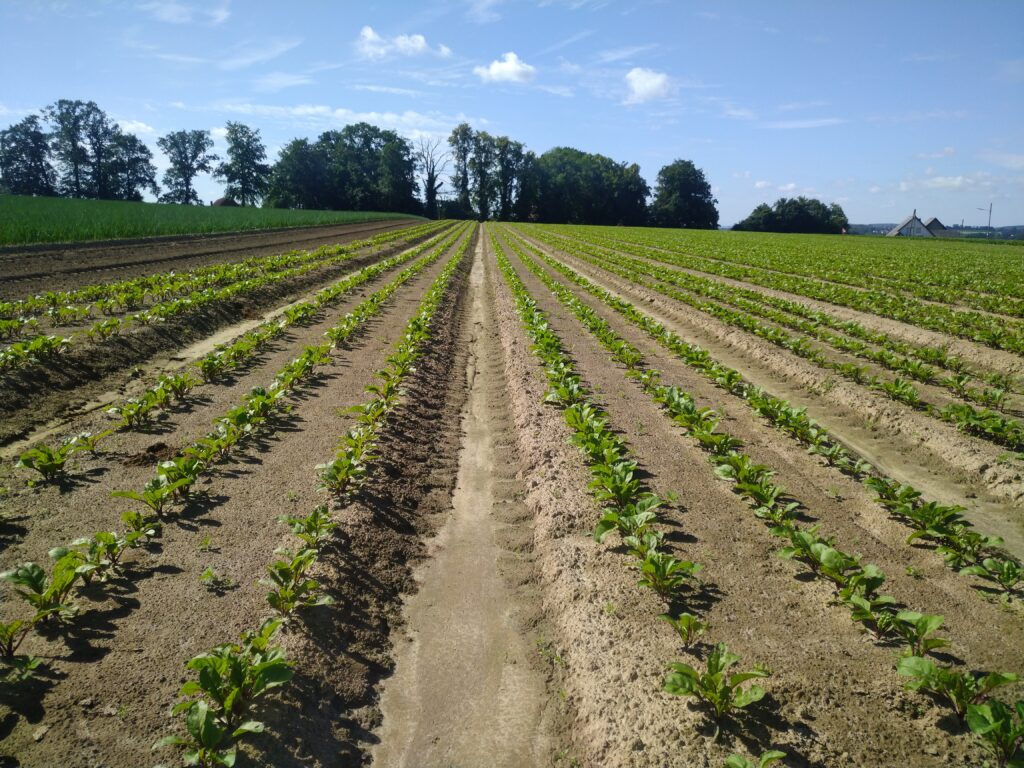
For three months, we worked on a collectively run vegetable farm somewhere in the German speaking world. The core team is a collective [1] which has been producing certified organic vegetables on 50 hectares of land for decades.
The founders (only men) of the collective came from the ‘alternative’ movement of the 1970s and 1980s. The collective arose from a desire to organise working together differently than in the usual top-down business models, and to do something practical instead of just protesting. Many similar collective cooperatives that began during this period failed sooner or later. Many gave up in times of economic hardship. In others, the legal owners took over and continued to run the business as a conventional company (the law does not accept alternative/collective/anarchist forms of ownership but requires a liable owner). Here we encountered a rare case where this had not happened. So we were incredibly curious to find out what was going on.
The cooperative operates around 20 market stalls per week at regional weekly markets. It also supplies two organic wholesalers and around half a dozen independent organic shops. Around 22 employees make up the collective (we call them collectivists).
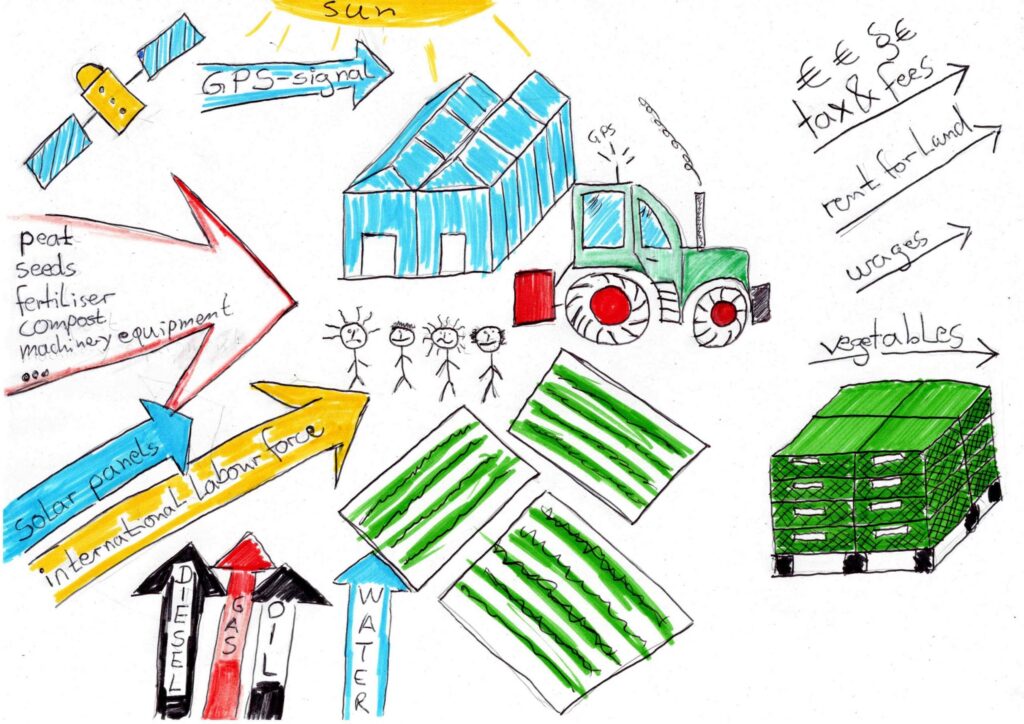
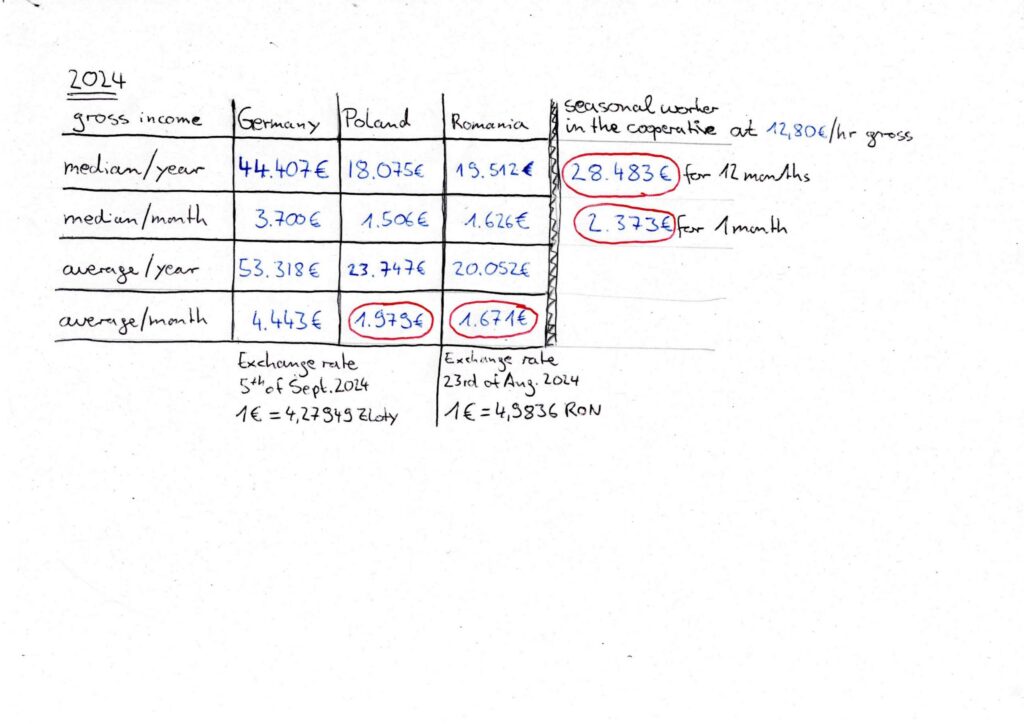
The majority of them work full-time or more than full-time (40-48 hours per week). About one-third of the collectivists work less than full-time on various hourly schedules. During summer saturday is a regular work day on the farm. At the weekly markets, saturday is a regular work day throughout the whole year. The collective additionally employs around 70 people throughout the year who prefer normal wage work without the extra responsibility of collective membership. These are mainly part-time jobs, for example sales staff at market stalls, a cleaner or truck drivers who deliver goods. They live nearby and work 15 to 30 hours per week. There is also a group of about fifteen seasonal workers who come every year during the high season. Many are from Poland, some from Romania, and there were two Ukrainian women during our stay. The total workforce is equivalent to approximately 40 full-time positions (including the market stalls).
The hourly wage was €13.80 gross for collectivists (at that time three euros above the minimum wage). All other employees were grouped into three wage levels: €12.30, €12.80 and €13.30. The lowest level, at that time €1.50 above the legal minimum wage, was the wage for seasonal workers in their first year. From the second season onwards, it was €12.80. Nowhere else in our own working lives or in the stories of other people, we did encounter a company of this size with such small wage differences.
The cooperative does not own any land: The fields and the farm are leased. The farm used to be an ornamental plant nursery with decades old run down greenhouses. The collective refitted the premises a lot. Buildings were converted or adapted, and new buildings were erected. The lease is long-term (with a 10-year notice period).
Legal Framework
Legally, the company is a registered cooperative. At the heart of the cooperative is the workers’ collective. The collectivists are the members of the cooperative. The registered cooperative is the legal body operating the company. The cooperative owns the means of production and holds the lease agreements. Legally, a registered cooperative must have a board of supervisors, and chairmen, etc. These requirements are formally met. Some collectivists put their names down on paper for those roles. Matter of fact, the collectivists organise themselves as a direct democratic group that makes decisions together. And is sharing the tasks of managing the farm. This also means that the collective is the boss of the employees (permanent employees, seasonal workers, temporary helping hands, sales people, drivers, etc.).
All members of the collective must be actively working in the company. Decisions on hiring/firing workers and admitting workers to join the collective are made by consensus. Decisions on technical issues, such as the purchase of new equipment, are made by majority vote (with 51% constituting a majority). The aim is to make decisions that are supported by the majority and to avoid crucial votes. Somewhere there is a statement of principles in which this is also written down. However, this was only written down ages after the company was founded. Collectivists legally join the cooperative by signing to a cooperative share worth €100. At the same time, the collectivists are employed by the cooperative. They are therefore their own bosses.
Organising the work
The daily work is divided among fixed departments. These are: harvest, outdoor cultivation, greenhouse cultivation, young plants nursery, workshop, markets and office. Each department has a spokesperson/coordinator. How coordination is done in detail is left to the respective departments. For example, the management of the harvest rotates between three workers. The outdoor team, on the other hand, is always coordinated by the same person. Some departments consist of only one person. The regular work day is 8 hours. The collective holds two daily meetings to organise the work and discuss minor and major issues. Work begins at 7:45 a.m. with the first meeting, which usually takes five to ten minutes. Here, the team coordinators explain what needs to be done that day. There is a certain amount of flexibility in terms of who works in which team, depending on peak workloads, the weather forecast and how much work needs to be done overall.
For the collective the lunch break is from 12:15 to 13:15. The seasonal workers have their lunch break from 11:30 to 12:00. This allows them to take their break undisturbed by their bosses (the collective members). This way it was easier to keep distance from each other during the covid pandemic. For the collective, the first half hour of the break is the actual break and time for lunch. All collective members pay a fixed monthly contribution for lunch. Lunch consists of bread, spreads, cheese, tea, coffee and of course vegetables. Occasionally, one of the collectivists cooks a hot meal for everyone. For example, on birthdays. The second half of the lunch break (30 minutes) is the second work meeting of the day. This meeting is held unpaid in break time. First, the afternoon work is organised, then there is time to discuss everything related to the management of the business. While we were there, the topics ranged from planning a summer party, to job applications, investments in equipment or vehicles, and reviewing the business numbers. Sometimes confidential collective issues were discussed. We had to leave the room for this, as we were only seasonal workers and not members of the collective. We were (pleasantly) surprised that there was absolutely no gossip or backbiting. We never found out what confidential matters were actually discussed internally.
All workers, whether employees or collectivists, earn money by doing wage work. In addition, the collectivists share (unpaid) management and planning tasks. In a conventional company this is the responsibility of the owner/capitalist. If necessary, additional meetings are held after work, which may be counted as working time or unpaid. Whether a meeting is paid or unpaid is decided jointly in advance, in case of doubt by majority vote. There are no owners skimming off the profits of the business. The collective decides jointly how profits are used: For new investments, as back up, for wage increases or something else entirely.
Several times, neighbours from the village or neighbor farmers from the area came by to ask for help or a favour. Once, a neighbouring conventional farmer came by to borrow a specific tractor for a specific task. As the machine in question is very sensitive, the collective decided to lend a collectivist along with the tractor and machinery for the rate of covering costs. As a thank you, we received a lot of cake. Really a lot of cake. A collectivist commented: ‘Yes, you have to understand that it’s not money that keeps up good spirit in business, but sugar or cake’ :-).
We always received our wages and payslips on time. Of course overtime was paid. If we had any questions about the paperwork, these were answered quickly.
Work processes and workers’ intelligence
The work processes in this company are very well organised. We always had sharp knives and good equipment. For people who do not work in horticulture themselves, it’s usually astonishing to hear that many farms don’t even manage to provide their workers with sharp harvesting knives. The cooperative had all kinds of harvesting knives in all sizes. One collectivist is responsible for sharpening the knives with electric sharpeners. If this worker is absent, she is always replaced by the same colleague. The collective figured out that the knives lasts longer when they are always sharpened and maintained by the same person. Different people would sharpen the knives at slightly different angles, causing them to wear out more quickly. When knives are needed for harvesting, the harvesting team takes the matching sharpened knives to the field in a yellow plastic box the size of a shoebox. After use, the knives are collected in a red plastic box and returned to the sharpening station. After being sharpened again, they are ready for the next use.
For us, this is a perfect example of workers’ intelligence. This process is logical and straightforward, yet we don’t know of a single other vegetable farm that does it this way. The collective decided early on that it would be cheaper and more efficient in the long run to purchase several additional tractors for specific machines rather than owning only a few tractors and having to constantly attach and detach machinery. As a result, more different tasks can be carried out parallelly within the regular 8-hour working day.
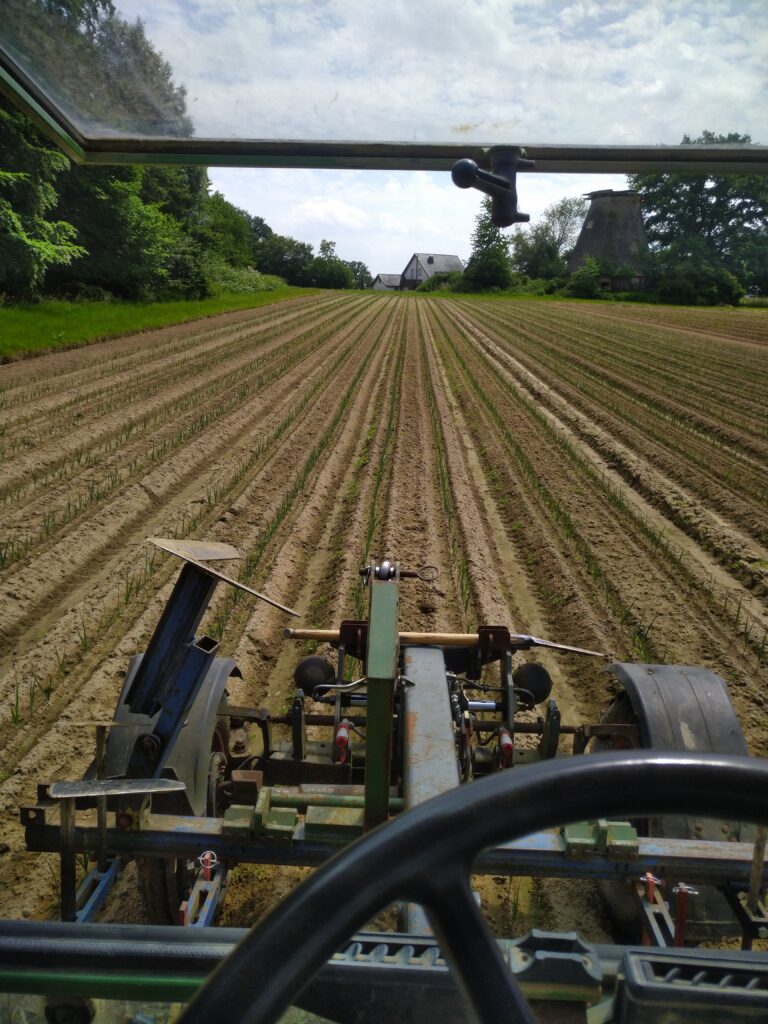
The weed management was impressive – highly proactive and always early on. ‘The best time to control weeds is before they are visible, or at the latest at the cotyledon stage.’ said a senior collectivist. If this works out, there is much less manual hoeing and weeding than on other farms (see chapter 4 ). You probably have to hoe or weed the areas just as often or even more often than if you wait until the weeds are bigger, but the work is much quicker. For example, a Chenopodium album is quicker to hoe out when it is still in the cotyledon stage than if you wait a few weeks until it towers above the vegetables.
The bed lengths are standardised so that work processes and equipment are all adapted to this specific length. This means that a bed is always 100 metres long and each set of vegetables that is sown/planted at once always covers a gross area of approx. 1,000 square metres = 6 beds, each 100 metres long, with a path next to it (of course there are a few exceptions). Standardised bed lengths make certain work processes easier, such as finding insect protection nets, irrigation materials and cover fleeces in the right size. This also makes it easier to calculate the required amount of seeds or nursery plants, estimate the expected yield and make the corresponding calculations for weekly wholesale offers.
This is similar to the small-scale market gardening approach. [2] Here it is done on a larger scale. The collective realised, even if some beds are 110 m or 130 m long, they do not make any additional profit by growing vegetables on these extra metres, as it complicates all the above-mentioned work processes (“Damn, where is that extra-long cover again, in the pile with all the normal-length covers… and that extension for irrigation that we only need once a year… Oooh, forgotten, no idea…”). So some field edges are simply open ground or grassland.
Our average workday
We worked in this veggie farm from the beginning of April to the end of June. Working hours were usually from 7:45 a.m. to 4:45 p.m., monday to friday, with about three saturdays a month (on these days, we usually finished earlier). We rarely worked overtime (apart from saturdays). During the season! In agriculture! Unbelievable! Really! Our colleagues told us that things had been different the previous year: For about four weeks, they had been short-staffed by four seasonal workers.
In summer, depending on the weather forecast, the harvest team often started between 6 and 7 a.m. to get the harvest from the field to the washing machine and processing it in time before the heat sets in. The seasonal workers in the harvest team finished work earlier on these days, while the collective members still worked until 4:45 p.m., thus accumulating overtime.
We had many different tasks, which made our working days diverse and less boring. Each task involved a different type of physical exhaustion, so it never became too strenuous. Sometimes we had to do very monotonous tasks, such as washing and sorting carrots or beetroot on a conveyor belt, but the team coordinators made sure that such tasks were rotated. Sometimes you had to do this kind of work all day, but then you could also ask to swap with someone else half way.
We mainly worked in the harvesting team and in the greenhouse. At the beginning of April, lamb’s lettuce, radishes and parsley were still being harvested in the greenhouses. At that time, only leeks were harvested outdoors. Later in the season, we also harvested radishes, spinach, bundles of carrots, rhubarb, potatoes, various lettuces, fennel, cauliflower, broccoli, kohlrabi, pak choi, Swiss chard and other vegetables in the outdoor fields. In total, the farm grows 40 different vegetables. Harvesting also includes washing and preparing the produce ready for delivery to customers: weighing and packing it into crates, stacking it on pallets and labeling it.
We also spent a lot of time in the greenhouses. From mid-April onwards, we planted tomatoes and cucumbers in the greenhouses. And this is how it works:
First, the soil in the greenhouses must be prepared. A small tractor with a rotary tiller tills the soil. Next, the future beds and footpaths between the beds are marked out. Drip hoses for irrigation are laid out and checked for functionality. The beds are covered with black plastic mulch sheets. This covers the soil and prevents weeds from growing. Holes are cut into the mulch sheets at regular intervals. The nursery plants are planted into the soil by hand through the holes.
The tomato and cucumber seedlings were sown in the nursery and grown in heated nursery greenhouses. Once ready the plants are packed into boxes, stacked on pallets and transported to the greenhouses by forklift: First, the plants are packed into boxes by hand, six tomato plants per box. The boxes are stacked on pallets. A forklift transports the plants from the nursery to the greenhouse. And here the whole process is reversed: the boxes are unstacked from the pallets by hand, the plants are taken out of the boxes and planted in the planting holes at exactly the right distance (60 cm) apart. Next, the plants are watered with a hose so that the potting soil mixes well with the greenhouse soil and the roots can grow well.
If tomato plants are left undisturbed by humans, they grow into large random bushes with many side branches and countless small fruits. The plants do not grow upwards because they are too heavy to support their own weight. Harvesting would be very annoying and unprofitable for commercial cultivation. The plants need some kind of structure. A lot of work throughout the season therefore goes into putting up support strings and winding the plants around these strings. In summer, the plants grow very quickly and need to be wound once or twice per week. Winding is a job that must be done carefully, otherwise the fruit can break off, or worse, the entire plant. Winding tomato and cucumber plants also involves removing the side shoots. This is called pruning. Otherwise, the plant puts all its energy into the side shoots instead of stronger branches and larger fruits. Depending on how tall the plants are, workers must either work in a bent down position, kneeling, or stretching. If the plant is as tall as the worker, they are fortunate and the posture is comfortable. If the plants are very tall, workers can climb onto work carts to do the job in a good position.
Of course, it can get very hot in the greenhouse in summer, and even easy tasks can be sweaty. One way the farm tries to deal with this is to do greenhouse work early in the morning with a larger group of colleagues. Later in the day, the greenhouse team can help out in other departments. Another option is to base the weekly work schedule on the weather forecast. This means greenhouse work on cooler, rainy, cloudy days. Usually, there are not enough cloudy days in summer to get the greenhouse work done… So we sweat.
Housing
The farm rents several flats in the village to accommodate its seasonal workers. We lived in a furnished room in one of these houses. This cost us around €150 per person per month (including all costs like electricity, internet etc.). At the beginning (in April), we were alone in the large house, and at the end of our stay (late June), the house was fully occupied. Eight of us stayed in six rooms (two rooms were used by couples). On the ground floor, the five of us shared a large kitchen, a bathroom with a toilet, a separate toilet and a huge garden with a beautiful terrace and a cherry tree. The house was well looked after. It felt a bit like a holiday home: the rooms were furnished, the beds had good mattresses and the kitchen was fully equipped. TV and internet worked reliably, which was important for our Polish colleagues, watching Polish news and staying in touch with family and friends in Poland. We were well looked after in every way, even with garden chairs, a barbecue and beautiful flowers.
The lawn was mowed regularly. The company provided bicycles for all seasonal workers. We commuted to the veggie farm in ten minutes by bike. Our Polish colleagues preferred to travel together in a car, which they took home from work every day and also used for weekly shopping. We were happy with the bicycles and also used them to go on a few trips in the area.
Nevertheless, we lived in close quarters. At one point, a gastrointestinal infection spread among the staff. Two colleagues in our building also fell ill, but fortunately not everyone was infected. Luckily, we had no covid infections in the house. There was an covid outbreak at work, but it was quickly traced and contained. The company provided a huge supply of rapid tests for the staff. When some colleagues found out they had covid infections, everyone at the company got tested. Ten colleagues tested positive, but only five were confirmed by a positive PCR test result the following day. Those infected stayed at home for as long as necessary, and no one pressured them to return to work before they had fully recovered. Our housemates, who were in the majority from Poland, did not speak much German or English, and we did not speak Polish, so we did not talk much to each other. They usually worked a six-day week and used their free time to keep in touch with relatives. They brought large quantities of food supplies from Poland, storing loads in the freezer and went shopping at discount supermarkets. Occasionally, we would have a lemonade with some colleagues after work, provided by the farm.
In total, we stayed for 13 weeks on farm. We took a few days off in between to visit friends. This was easily possible when arranged in advance. On average we worked 45.8 hours per week on the collective wage rate of €13.80 per hour gross (€9.37 net). At the time, this was €3.50 higher than minimum wage. This corresponds to €8,216 gross in three months per person, which is €1,862 net per month. If we had not gone on any trips or made any other non-essential purchases, it would have been possible to save around €6,700 between the two of us. Of course, this is a different story for people with children, relatives in need of care or other duties.
Health and safety
In stark contrast to many other companies we have worked for, occupational safety and accident prevention are taken very serious at the cooperative. At the beginning of our stay, we received an hour-long briefing on occupational safety and potential hazards on site. Among other things, we were told where to find first aid kits and telephones and which colleagues are trained as first aiders. In addition, there was a detailed (really very detailed) forklift training session. The collective ensures that there is always enough suitable equipment for all employees, such as gloves, ear muffs, rainwear, aprons, rubber boots, sun hats and sun screen. Machines, forklifts and tractors may only be used after instruction by more experienced colleagues. One weak point was that only one collectivist was in charge of these health and safety briefings. When he was busy, it took longer to receive certain instructions. At the time, we did not find out how the instructions for non-German-speaking colleagues was done.
On several occasions, we noticed the collectivists adhering to health and safety standards, even if this meant that some tasks took longer to complete. Some collectivists explained to us that an accident costs the company much more time, effort and money than simply taking a little longer to complete the task and work safely. However, some of our colleagues did not consider it so important to work carefully and in accordance with health and safety regulations. If someone does not want to use sunscreen, hats or ear protection, there is not much you can do.
Atmosphere
The atmosphere in this workplace is mostly friendly and welcoming. We did not have to listen to sexist, racist or chauvinist bullshit, as is the case in many other companies. [3] What we particularly liked was the clarity in aims: The cooperative is a business and has to make profit. Many so-called ‘alternative’ projects (which we now prefer to refer to as hobby or self-realisation projects) often lack a clear objective. In addition, the atmosphere is down-to-earth, without subcultural jargon. The focus is to work, not on talking about how amazingly ‘different’ and ‘sustainable’ it is. Many customers at the market stalls do not even know that this company is run as collective-cooperative. What really matters is the production of high-quality vegetables. In our experience, this down-to-earth mentality is very rare in ‘left-wing projects’ (see chapters 1, Eco Village and chapter 4 on CSA).
Within the collective exists unity, that it is important that employees are able to safely operate the vehicles and machinery needed for the company’s daily operations (forklifts, cars and around seventeen different tractors). It was encouraging to see it went withtout saying that many (young) women were driving tractors and forklifts.
During the work meetings, we noticed the older collectivists (50 years and older), who have been working in the collective for twenty or more years, taking up more speaking time, than the younger ones (aged mid-twenties to mid-forties). One younger collectivist, who is very attached to the place, told us: He had learned in the collective that there are always a few people who feel inclined to say something at the end of a discussion. He simply accepts that they need this space and that in reality things will go on anyways.
On hierarchies
Some collectivists have managing or coordinating tasks. It seemed to us that those roles did not become part of their personal identity. The tasks of a farm manager or farm owner are distributed among the collective, with some taking on more responsibility than others. For us, this made a big difference in our daily work.
Of course, there are hierarchies in the sense that some collectivists are more committed and motivated, work longer hours or have more skills or experience. However, these social differences are not transmitted in wages or other formalised differences. For example, there is no boss who owns the business and therefore decides who does what. People with coordination tasks still do practical work and more tedious chores, such as hoeing or washing carrots. There is a set hourly wage, which at the time was €13.80 gross per hour. Seasonal workers and part-time workers have different tax brackets, so their gross wages vary slightly. However, the aim is to achieve a somewhat equal net wage for all. The only exception to this rule is one office worker: It was impossible to find a trained office worker willing to work on the collective wage rate. So her wage is about 1€ higher.
Of course, there is a power imbalance between the collectivists and the other employees of the cooperative. After all, the collectivists decide about hiring and firing. For us, it made a big difference that even the coordinators are expected to perform monotonous tasks. In other companies, it is common practice to assign these tasks to the lowest-paid employees.
Excursion: Ecological pragmatic compromises on the free market
Our time at this veggie farm has shown us the importance and, at the same time, the shortcomings of organic agriculture. There are many practices which comply with official organic certification standards but still may be improved from a strict ideological-idealistic environmentalist point of view. It has shown us that certified organic agriculture is necessary but far from sufficient.
We need to understand the global economic relations of food production in order to understand the impact of our work and recognise how those work processes set us into collaboration with workers around the world. An (organic) vegetable farm is not an island, but part of global supply chains. In academic left-wing theories, this is also referred to as global socio-ecological metabolism. [4] Few examples:
Use of peat soil for plant nursery
The cooperative’s nursery plants are grown in potting soil consisting of 70% peat and 30% compost. Peat extraction requires the drainage of wetlands. This process releases large amounts of CO². It also results in the loss of species-rich wet habitats.
Use of seeds from all around the world
One of the tomato varieties grown on this farm comes from certified organic tomato seeds propagated in Thailand. Procuring these seeds locally is very difficult, if not impossible.
Use of hybrid seeds [5]
The farm (as almost all (veggie) farms) uses hybrid seeds, as these varieties are better suited to large-scale commercial production. The reason for this is that they generally produce higher yields and ripen more evenly, which means that a certain batch of vegetables can be harvested with less effort. We are not opposed to the use of hybrid seeds on principal. It is simply important to recognise that this leads to dependence on specialist companies in the current economic system. Seed production and seed propagation in industrialised agriculture has been outsourced to specialist companies already since decades. Doing things differently would be quite complicated, and farmers/horticulturalist would have to re-learn lost skills in propagation cultivation.
Purchase of nursery plants from a specialist vegetable plant nursery
These nurseries specialise in the production of young plants and can produce them more cost-effectively than smaller, on-site propagation units. As a result, many vegetable growers no longer cultivate their own young plants, leading to a loss of expertise and competence. In Germany, there are only four to ten certified organic nurseries, which produce more or less all organically traded nursery plants for commercial production. This sometimes leads to long transport routes. This can also become problematic if plant diseases or pest populations spread unnoticed in the nursery and are passed on to farms across regions with the nursery plants.
Use of plastic
Regional vegetable production with the longest possible season means that techniques for early cultivation must also be used in the open field: For this reason, many plastic sheets and cover fleeces are used to protect the plants from late frosts in spring or to accelerate growth slightly. There are also many different types of plastic netting used to protect against pests such as aphids, flea beetles and cabbage white butterflies. These nets are difficult to recycle when they are discarded after a few years. They end up in the residual waste. A grower friend of mine remarked that since travelling through India and Central Asia, she has seen very different mountains of rubbish and (non-)concepts of waste prevention and disposal, and that the few fleeces from an organic nursery are not the most pressing waste problem in the world. Another veggie grower friend remarks that he likes to cut out this comment, as it follows the classic excuse of ‘the others have to do it first’.
Use of animal nitrogen fertilisers
The cooperative mainly uses hair meal pellets and sometimes horn meal. These fertilisers are obtained from the ground horns of slaughtered cattle or pig bristles. Certified organic slaughterhouses do not produce significant quantities of these materials. Organic meat has only a tiny market share. Therefore, organic guidelines allow the use of horn meal and hair meal pellets from conventional slaughterhouse waste. We do not know exactly where the fertilisers used by the cooperative come from and under what conditions they are produced, but we do not have very positive images in our minds… In any case, the meat industry does not care how the organic sector fertilises its land, and this waste product exists in the world nevertheless. The question is rather how the industrial meat industry could be drastically reduced in size. This may free up arable land, previously used to grow fodder. Fertiliser crops could be experimented with here. However, this is a technical discussion that we cannot do justice to in this short text.
Use of fossil fuels for heating
This farm used very old greenhouses, heated with oil, resulting in very high heating costs. During our stay, the collective began to grow tomatoes in a more energy-efficient way: instead of planting the young tomato plants in a heated greenhouse at the beginning of April (the heating switches on when the temperature falls below a certain level), this year the tomatoes were sown two weeks later and not planted into the soil until mid-April. This meant lower heating costs, but also a later start of the tomato harvest.
Use of a whole range of fossil fuel powered machines
For environmental reasons, the heavy use of machines in professional agricultural operations, including organic farms, is highly problematic. Matter of fact diesel and tractors cost only a fraction of what 100% manual labour would cost per hour. Many people from (middle-class) ‘eco’ bubbles or green social milieus that we know seem unaware of what it means practically, for example, to stop using a tractor-mounted hoe but to weed or harvest carrots exclusively by hand, or to dig with a spade instead of ploughing. This is certainly possible, but we have no idea how the corresponding labour costs would be reflected in food prices.
What will happen in agriculture in case of severe shortcomings in diesel supplies? Or if energy prices rose sharply? Of course, we must radically reduce the consumption of (fossil) energy. In doing so, it is important to compare the consumption of fossil fuels in agriculture with that of other sectors and to examine how useful the respective products are. After all, vegetable and food production makes more sense than, say, the production of weapons, fast fashion, highly processed unhealthy foods, Red Bull energy drinks in aluminium cans, SUVs, private jets, cruise ships, or server capacities to stream cute cuddle cat videos online anytime, anywhere…
Use of specially bred beneficial insects
Chemical pesticides are not permitted in organic farming. An alternative strategy is to use beneficial insects that (can) eat/attack pest populations. These beneficial insects are a market of their own. They are bred in special laboratories and sent via mail. Bumblebees are also widely used for pollination in greenhouses. Bottlenecks in delivery can very quickly lead to serious problems in many organic (and conventional) vegetable farms. Beneficial insect companies keep their laboratory breeding methods secret. We are curious to get in touch with colleagues who work there.
Marketing vegetables via many scattered market stalls
Compared to the goods turnover and logistics systems of supermarkets, the distribution of vegetables via many different market stalls is very inefficient (per unit); considering how far the vegetables have to be transported in small batches in different directions. At the market, a stall is only set up for a few hours and then dismantled again. At each weekly market location, only a tiny fraction of the city’s inhabitants buy their vegetables at the weekly market. But of course, the veggie farm cannot force the immediate neighbourhood to consume its entire production. After all, we live in a capitalist society, and free choice in the (super)market or discounter is a progressive achievement. Anything else may cause socialism.
The vegetable farm is part of a global socio-ecological metabolism. Like any agricultural business, it is integrated into global supply chains. Many of the smaller projects we visited strongly emphasised the importance of marketing their products ‘locally’. We wonder how much of a difference this actually makes when most of the inputs come from all over the world. For example, small farms often rely on a high proportion of compost that is produced elsewhere and delivered by trucks. And they often rely on young plants that are produced in specialised young plant nurseries.
All of these issues listed above, are ecological and pragmatic compromises, which are common practice in organic vegetable growing and organic agriculture. This is not a specific criticism of this vegetable cooperative, but simply the reality of the situation.
When we tell colleagues or comrades from smaller businesses or collectives/cooperatives about this veggie farm, they are often disappointed by the ‘conventional’ conditions and pragmatic horticultural compromises, or even just by the way people interact with each other in everyday working life: ‘But in a collective, everyone is equal… They rarely hold longer plenary meetings… and they work sooo much.’ When we meet colleagues and people with professional experience in agriculture or horticulture, they are often impressed by the high level of equality among collectivists and colleagues in this farm. For them it is impressive, that professionally growing vegetables is possible with largely humane working hours, complying the 40-hour week and part-time models as common practice. There is no bullying or exclusion. For some farmers, the fact that such a business can exist without a heavily indebted owner sounds like a miracle.
Conclusions: Thoughts on collectives, cooperatives and class struggle
We have many fond memories of working in this collective cooperative, but also some unanswered questions. What role can or should collective/cooperative enterprises play in revolutionary moments?And along the way: What does the continuation of grassroots union/operaist [6] approaches look like in worker-led companies with relatively good working conditions?
Is it more reasonable to fight for improvements in lousy companies with very shitty working conditions and to organise accordingly? Are collective enterprises capable (or willing) to show solidarity with workers in other companies? Or in other words: How can class struggles continue if the workers have already taken over the company and its means of production and are managing it?
Collective/cooperative work can significantly improve the quality of life and work on a daily level. However, it is wishful thinking to believe that capitalism and exploitation can be abolished solely by establishing more workers’ cooperatives: On a small scale, it is quite possible to imagine that workers as a collective, with a high degree of motivation, autonomy, initiative and cooperation on an equal footing (equal wages), without a boss, can successfully plan, manage and execute complex work processes. Not having to put up with ridiculous foremen and their pretentionous fuss makes capitalism at least somewhat more bearable.
At the same time, this mode of operation does not change the fact that the veggie farm is in structural competition with other producers on the so-called free market (product quality, availability, prices, etc.). Ultimately, these formalities cannot determine whether the workforce, as individuals or as a collective, is willing to build practical, solidarity-based relationships with workers in other companies and industries and to behave accordingly in terms of class politics. If one is comfortable enough in one’s own circumstances, inertia may set in. It is also questionable how a collective wage relates to union tariff agreements with hierarchical wage levels. In the worst case, the cooperative is a wage squeezer toiling below union agreements(?).
On a global (and national) scale, wealth continues to be redistributed upwards, and the profits and concentration of power/capital of large corporations continue to grow… It’s always the same story. How boring.
Another challenge we encountered is that the collectivists have to be both bosses and workers. The pressure to compete in the market is borne by the entire collective rather than by a single owner. This can be a relief, but it leads to a kind of class struggle within oneself. During our time there, for example, the sales turnover of one of the weekly market stalls shrinked. Instead of three salespeople, there was only enough work for two salespeople left on this weekly market day. For a long-time employee of the cooperative, this meant fewer working hours at this market stall, even though it was clear that it might be difficult for this person. There were considerations to offer the employee shifts at another market stall. We do not know how the story ended.
Taking responsibility for the business also means that the ‘guilty conscience’ when calling in sick is a little louder than elsewhere. If a collectivist falls ill, it means the other members have to fill the gap, meanwhile statutory sick pay continues to be paid of course. Some collectivists find it difficult to switch off from work in their free time. They feel a huge sense of responsibility.
Anyways, we perceived work motivation in general to be significantly higher than in comparable companies, as was the scale of unasked independent thinking along in work processes. During peak periods or quiet periods, colleagues are much more willing to work longer or shorter hours on a flexible basis.
Sometimes we noticed that individual seasonal workers were less motivated when working beyond the direct supervision of the collectivists. For example, they were less careful when weeding, or when winding up the tomato plants. Strings got wound too tight or too loose. In the worst case this results in broken tomato plants. Once, we observed some seasonal workers driving at 30 km/h on a 70 km/h road so. Prolonging the time sitting in the car between two tasks.
To which extent does the usual ‘revenge of the oppressed’ of workers against their bosses by working slowly or messy make sense when the bosses are workers like themselves? Sometimes we wondered which group of workers actually gets the ‘better’ deal: The collectivists, bearing the entrepreneurial risk and spending unpaid working hours on meetings. Or the seasonal workers, who are paid (almost) the same wage and return home at the end of the season? In their home countries their money has a greater purchasing power. Unlike the collectivists, the long-term employees and seasonal workers ‘only’ have to work, without having to spend time and mental capacity to unpaid collective meetings.
While proofreading this text, a comrade added:
“Motivation cannot be explained primarily by better deals or privileges. Rather motivation is explained by the fact that workers feel connected and in control of their work. Those overseeing the bigger picture, therefore know that certain tasks need to be done will do them. Seasonal workers were hardly involved in the overall planning, if at all. Therefore they are more likely to just work to rule. It was no different in the GDR: Formally, the peoples-owned enterprises (VEB) certainly belonged to the people. But “the people” do not care if they have no say in the matter and just dawdle around during work hours…”
This index compiled by the Federal German Statistical Office compares the cost of living for households in different countries. If Germany is assigned 100 index points, the cost of living in Poland is calculated at 66 points and in Romania at 58 points. [7]
If you worked full-time on this vegetable farm for a year at an hourly wage of €12.80 gross, you earn a gross income of €28,483 (€2,373 per month). Compared to the median income of €44,407 or the average income of €53,318 per year in Germany, this is a low income. Nevertheless, this wage is significantly higher than the wage level in Poland. There, the median income is equivalent to €18,075 per year (€1,506 per month) and the average income is €23,747 (€1,979 per month). In Romania, the median annual income is equivalent to €19,512 (€1,626 per month) and the average income is €20,052 (€1,671 per month). In any case, incomes in agriculture in these countries are far from any average values. National differences in weekly working hours, holiday entitlements, sickness and old-age benefits are not taken into account in this brief comparison.
We write this because it might be interesting to question the widespread victim narrative that is often used when talking about seasonal workers. It is noteworthy that many seasonal workers have been returning to this vegetable cooperative every year for decades, some for thirty years. Experience knows that workers do not stay that long if the working conditions are too bad. New seasonal workers are not recruited through a temporary employment agency, but on the recommendation of other seasonal workers. All in all, it seems that many people like the workplace. We have hardly heard of any other workplace with rather good comparable conditions for seasonal workers; most of the time, it is as described by comrades from Notesfrombelow: https://notesfrombelow.org/article/workers-inquiry-seasonal-agricultural-labour-uk-sh or something like that https://notesfrombelow.org/article/struggle-agricultural-workers-italy. For a broader overview: https://notesfrombelow.org/issue/seeds-struggle-food-time-crisis.
The collectivists share management tasks and responsibilities, but also the more delicate, creative work and long-term planning and strategy tasks. Their wages are rather high when they start as unskilled workers or straight after training, but older, more experienced collectivists could earn 50-90% more money as team leaders or operations managers on other veggie farms. However, they have decided against this and prefer to work collectively, with equal pay and all the social challenges that come along with collective cooperative work modes.
Is it ideology that motivates people to stay, or is it being rooted in the region? In our opinion, it is a combination of both: The people who stayed had social and family ties or other commitments in the village. Some decided they would rather work in a collective than start their own business, becoming a boss and spending the rest of their lives paying off a mortgage to the bank.
Some of the older collectivists are couples with both partners working in the cooperative. And somehow some of them have managed to finance their own homes and raise children. Although they work for low wages, they have been able to achieve a certain degree of material security.
Role in case of a workers’ uprising
What will happen in this farm if a significant proportion of the country’s workers dared to revolt against the capitalist economic system? If workers stopped paying rent and stopped doing useless jobs? If we placed the economy under democratic self-management and refused to continue destroying the environment?
If the cooperative stopped paying rent, it would run into problems with the landlords who lease land and business premises to the them. How would the collectivists respond to this? The main landlord is a family, who is not only earning money from leasing land, but also running a farm themselves. Other relatives of the landlords run a business in the village. They are very well integrated into the small-town community and are involved in local cultural initiatives and the Green Party. This would therefore lead to serious conflicts in the village.
In practical terms, the question will be in which cities and industries such a revolt may begin and how quickly it will spillover to rural areas. It is questionable under which circumstances and conditions farmers and horticulturalists will supply insurgent communities with food instead of continuing to produce for money on the market. It is also questionable who will take over and manage the cold storage and warehouses of the wholesalers, to whom the cooperative is selling produce. Hopefully it is the workforce taking over the wholesalers.
According to the film The Loud Spring, in the event of such an uprising, we may focus on truly useful work and stop doing bullshit jobs. Which jobs are really bullshit jobs reaches beyond the scope of this text. Anyways there are countless jobs, done because they generate profit in the current capitalist economy, or because someone is paid to do them. However, upon reasonable consideration, they are utterly useless: Advertising, influencers, designers for app-controlled coffee machines, ocean cruise ships, the tobacco industry and many more. If we stop these useless jobs and put our work force into reasonable and useful work, the average working day might be reduced to three hours, claims The Loud Spring.
The remaining time is set free for reproductive labor of all sorts and democratic self-organisation in neighbourhood assemblies. Or for other things we desire doing.
It is difficult to calculate, but we are concerned in this regard. At least in the mid term, agricultural work cannot be done in three hours a day. If a large number of people with no agricultural experience suddenly joined this cooperative, it would initially cause a lot of work to coordinate and train everyone.
Vegetable calculations
Currently, this veggie farm annually sells approximately 885 tonnes of vegetables each year. This requires in total 60,000 working hours per year in cultivation (excluding the retail department). This results in an average productivity of 14.75 kg of vegetables in retail quality per working hour. [8] Transport and marketing are not included here. Converted to full-time job equivalents, this requires 34.65 horticulturalists working a 40-hour week.
The annual yield of 885 tons divided by the 34.65 full-time positions results in a productivity of 25.54 tons per full-time worker (equivalent) in this veggie cooperative. At the current level of technological development. This figure is, of course, only a rough guide, as it simply lumps together all crops from coriander to potatoes, carrots and lettuce. Furthermore, even in economically successful years, the total amount of produce sold is smaller than the quantity actually produced: Sometimes things go wrong and vegetables that are nutritious and edible cannot be sold because nobody wants to buy them or because they do not meet primarily aesthetic marketing requirements – too small, too large, too this, too that, blah blah blah. In other words, the gap between quality does not meet retail demands and literally starving is very huge. In true emergencies, people do not make a fuss about eating aesthetically inadequate or even ugly vegetables.
This allows us to estimate how many people the yield can nourish per year: The current per capita consumption of vegetables in Germany is around 100 kg annually. Roughly estimated, this means that the 50-hectare veggie farm covers the current vegetable demands of 8,850 people in terms of quantity alone. In this farm’s cultivation system, this means an area of 56.6 m² is required to meet the annual consumption of 100 kg of vegetables per person. This rough estimate does not take into account many important factors, such as seasonal fluctuations and the variety of vegetable types.
8,850 people sounds like a lot. However, this number is far below even supplying the 40,000 inhabitants of the nearest town. To do so, four to five veggie farms of this kind are needed only here.
Now, one might argue that there is not enough arable land available. Obviously, all available arable land is already being cultivated. In a post-capitalist, socio-ecologically reasonable world, one possible consequence it to eat much less meat and grow correspondingly less fodder – thus freeing up arable land for vegetable cultivation and fertiliser crops. The current global trade routes for food may have to be reconsidered in each individual case. Even a per capita consumption of 200 kg of vegetables per year can be covered. The neighbouring land of this veggie farm is farmed conventionally. Animal fodder, energy crops for biogas plants, potatoes and sugar beet for the food industry are grown here, also for export. The current food consumption of the population in Germany, with its current eating habits, requires 16.6 million hectares of farm land worldwide. [9]
At the same time, in total approximately 16.5 million hectares of land in Germany is used for agriculture. That is about half of the country’s total surface. In purely mathematical terms, this may be enough space available locally. However, we are not talking here about banana and coffee imports or meat imports and exports. 13.8% of agricultural producers in Germany cultivate 10.8% of this area according to certified organic standards. That is 1,784,002 hectares (in 2021). [10]
According to the Zukunftsstifung Landwirtschaft (=Future Foundation for Agriculture), which runs educational projects such as Berlin’s Weltacker, there is 1.6 billion hectares of usable farmland available worldwide. [11] Divided by the total world population, this means that 2,000 m² are available per person. [12] Of those 2000 m², 81.9 m² are for vegetables, 89.4 m² for roots (potatoes, yams, etc.) and 123.1 m² for legumes, adding up to 294.4 m². With a predominantly plant-based diet and reasonable land use, the globally available arable land should still be able to feed a world population of 9 billion people in 2050. [13] As mentioned above, the veggie cooperative in this chapter needs an area of 56.6 m² for 100 kg of marketable vegetables, or 113.2 m² for 200 kg of vegetables per year. Depending on the categorisation of the individual vegetable crops, this cultivation system can be compliant with the available land in the 2000 m² Weltacker model calculations.
Footnotes
[1] Registered co-operative or just co-op (Genossenschaft e.G. in German), refers to the official legal structure of the farm. The expression collective refers to the social mode of organising the farm.
[2] A market garden is a small-scale farm which often markets its produce locally and directly. A small patch of land is used very intensively and efficiently. Usually, market gardens do not use heavy machinery, which saves space as you don’t need driveways for big tractors. Comprehensively explained in this book: https://themarketgardener.com/books/the-market-gardener/ . Jean-Martin Fortier. The market gardener book. Or in these youtube talks: https://www.youtube.com/watch?v=0hBUOdv2vn8&list=PLiM0T_Y7peh-2sjP2oC2ZgI7IPIbhMURr (both accessed 10th of January 2025).
[3] We only understood German and English. We did not understand what some seasonal colleagues said in Polish or other languages.
[4] Back in the day already Karl Marx and Friedrich Engels spent a lot of time writing about this and in particular the metabolic rift. For a rough introduction Der Öko Marx by John Bellamy Foster, published in Le Monde Diplomatique 7th of June 2018: https://monde-diplomatique.de/artikel/!5508514 (accessed on 1st of December 2025). More recently Kohai Saito’s writings caused renewed attention to the issue in recent years.
[5] We discuss the advantages and disadvantages of hybrid seeds in our first chapter: https://www.angryworkers.org/2023/01/29/farmworker-fury-inquiries-about-organic-agriculture/ Hybrid seeds have to be bought anew every year from agro-chemical corporations, which creates long-term dependencies. Using non-hybrids seeds is a bit like using free- or open source software, anyone is free to experiment and breed with those seeds or to make their own seeds. This is very interesting when thinking about truly sustainable agro-ecological systems that can function without the industrial-capitalist agricultural industry. However, hybrid seeds are very common in conventional and organic horticulture because yields are higher and crops grow more uniform.
[6] Operaism means a non-dogmatic workers-focussed neo-marxist current, which strongly inspires us for this text and helps us analyse. For an overview https://de.wikipedia.org/wiki/Operaismus (accessed on 8th of Februar 2025). Or even better: https://www.angryworkers.org/2021/10/03/the-renaissance-of-operaismo-wildcat/
[7] All data in this paragraph: https://timeular.com/de/durchschnittsgehalt/polen/ , https://timeular.com/de/durchschnittsgehalt/rumanien/ and https://www.capital.de/karriere/medianeinkommen–so-viel-verdienen-die-deutschen-im-mittel-31108506.html accessed on 6th of January 2025.
[8] Calculations in this paragraph:
885,000kg of vegetables divided by 60,000 work hours = 14.75kg per working hour
One horticultural worker working a 40 hour working week, sums up to 1731.6 work hours per year: 52.5 calendar weeks minus 5 weeks annual holiday minus 2 weeks sick leave minus 9 public holidays.
All data taken from the veggie cooperative in 2020
[9] Michael Berger, Elisa Kollenda & Maja-Catrin Riecher. (2024). DER BLICK ÜBER DEN TELLERAND in BODENATLAS Daten und Fakten über eine lebenswichtige Ressource. Hrsg: Heinrich Böll Stiftung, BUND Friends of the Earth Germany, TMG ThinkTank for Sustainability Töpfer Müller Gaßner. https://www.boell.de/de/bodenatlas (accessed 11th of January 2025).
[10] All data: BRANCHEN REPORT 2022 Ökologische Lebensmittelwirtschaft. Hrsg. BÖLW. Bund Ökologische Lebensmittelwirtschaft. The umbrella organisation of several German organic growers asociations.
[11] https://www.2000m2.eu/de/ (accessed 11th of January 2025).
[12] Christine Chemnitz. Endlichkeit der Landwirtschaft. (2018). in: FLEISCHATLAS Daten und Fakten über Tiere als Nahrungsmittel. Hrsg.: Heinrich Böll Stiftung, BUND Friends of the Earth Germany, Le Monde diplomatique. https://www.boell.de/de/fleischatlas (accessed 11th of January 2025).
[13] https://www.2000m2.eu/wp-content/uploads/Weltacker_Broschure_2024_web.pdf (accessed 11th of January 2025).
This article from Angry Workers has some pretty interesting things to say that go the heart of the politics of worker cooperation. It’s framed as a critique of a text written in the 1930s by people from the Dutch and German left, and if you can bear with its ‘Marxiness’ there’s a lot of food for thought. I love this dig: “As a side note, I don’t think it is by chance that the council communist tendency had a fair share of astronomers in the past and software programmers in the present, people who appreciate closed systems.” Reposted by Sion Whellens
In order to guide our day-to-day political activity and medium-term organisational strategies we need a general understanding of what a working class revolution in the 21st century could look like and what the immediate steps of transformation from a capitalist to a communist mode of production are.
In the current moment, the chaos and drift towards destruction of the existing system forces a lot of people to reconsider the question of transformation and alternatives. These theories are closely tied to their practice. People who predict a collapse rather than a social revolution propose ‘leftist prepping’, people who believe that companies like Walmart already contain the basic framework for a socialist planned economy propose the nationalisation under a leftist government.
For comrades who assume that the ‘emancipation of the working class must be the deed of the workers themselves’ there are fewer theoretical elaborations out there. Those that have been circulated recently, such as ‘The Contours of the World Commune’ or ‘Forest and Factory’, are influenced by ‘The Fundamental Principles of Communist Production and Distribution’, written in the early 1930s by the Group of International Communists (GIC). The thorough and systematic argumentation of the text still makes it the main reference point and a theoretical basis for new initiatives.
The text was written as a response to the situation in the Soviet Union, where after a failed chaotic attempt to introduce a money-free economy during war communism, the state re-introduced both money and wage labour. Given that the state had systematically undermined the power of workers’ councils, it lacked input from the immediate sphere of production, which led to a planning system from above that was not only exploitative and oppressive, but also ineffective. Despite all propaganda, the fact that the dictatorship of the proletariat had turned into a dictatorship over the proletariat spread political despair amongst worker communists around the globe.
On the other hand, and this might be even more fruitful for the debate within our milieu, the comrades criticise the alternatives to central planning that have been formulated by libertarian communists and anarcho-syndicalists. The GIC criticises the libertarian idea of random take-overs of factories and the idea of localised self-management, which then, somehow, has to form a federal structure of decision-making. The anarcho-syndicalists get the stick for their egomaniacal thinking that the new society will be structured through the industrial unions of their own organisation.
For the comrades the crux of the matter with both the state communist and the libertarian communist economic models is that they hinge on personal decision-making. In the Soviet Union economic planning is done by members of central commissions from the top, which disempowers the producers. In the libertarian communist version the decision-making by local assemblies and factory councils will either not join up to a social whole, or re-create a libertarian version of a federalised bureaucracy.
Instead they propose a de-personalised system of general principles in the form of labour-time accounting. Every individual and every productive enterprise relates to the social production process through a transparent flow, or exchange, of labour-time. This form of open book-keeping can then be the basis for social decision-making, e.g. do we reduce our working hours now or do we work more over the short-term in order to build certain infrastructures that can help us reduce working hours even more in five years time. They claim that this de-personalised system solves the tension between autonomy and individual needs on one side, and the general interest and need for social planning on the other.
I think the text is still the main reference point for our debate for a good reason. It is non-utopian, in the sense that it derives its communist principles from the material conditions that are already given through the process of concentration and socialisation of labour in capitalism. I have two main criticisms of the text:
Firstly, rather than principles of communist production the text describes principles of circulation. It seems that for the GIC a ‘communist mode of production’ is mainly characterised through the absence of the capitalist forms of circulation, namely commodities and money, and a change in the formal ownership. In the text, workers are given an equal amount of labour time vouchers, but they still seem to be attached to either manual or intellectual jobs. It remains unclear whether the comrades think that the material form of production itself has to change, e.g. the various forms of division of labour (intellectual vs. manual, town vs. countryside, production vs. reproduction) or the form of technology. With Marx we can say that these material divisions are the main reason why capital or money, which are products of social labour, can appear as an alien, self-sustaining power. A communist mode of production would have to change the division of labour fundamentally in order to create the material basis for a true participation of everyone in the social process of decision making. If I am reduced to a particular repetitive job, I might have a formally equal ‘right’ to take part in wider decision making processes, but I will always lack the actual insights to do so.
Secondly, the text remains opaque about the question of how to come to wider political decisions, e.g. of how to deal with conflicts between particular and general interests. The fact that a political class has taken power over workers in the Soviet Union seems to push them into thinking that you can solve the issue of political power by delegating social decisions to an ‘economic’ system of measurement and circulation, based on a new legal system. Not only does this seem to perpetuate the bourgeois division between the political and the economic sphere, it also seems to reproduce a certain fetish of the independent power of ‘the movement of things’ and laws. This derives, as a consequence, from their lack of clarity concerning the need for actual changes of the form of production. If I can’t explain why workers have actual control over a production process, e.g. because the strict division between manual and intellectual has been abolished, then I have to give them a legal right to do so. If wider society has no actual control over what is happening within an enterprise, e.g. because there is a rotation of workers between various production processes, then I have to resort to the legal right of access. The problem is that these legal rights stand on sandy ground if they are not expressions of actual human activity.
In this sense the text reflects the debates of its time: how can economic planning not only be effective, but also maintain individual freedom? How can you, for example, encourage a large number of people, if that should be necessary after the revolution, to shift from their marketing job in front of flat screens to some hands-on work on tomato plantations? It seems that similar to the bourgeois theoreticians who they quote, prominently amongst them Ludwig von Mises, they hope that a certain ‘invisible hand’ of labour-time accounting can solve the puzzle. Given the two alternatives they see, the dictatorship of the supreme council or anarchist bricolage, this hope is understandable.
I think their model can serve as a general framework for a transitional phase after the destruction of the bourgeois state and the money economy, while the political focus has to be on the subsequent material transformation of the global production system. We will need an accurate system of bookkeeping in order to understand what productive legacy we have inherited and in order to discuss future social priorities. At the same time, the labour time accounting system has some in-built risks of becoming either a draining bureaucratic effort or a low-level economic fetish that might make people believe that they don’t have to take on certain things head-on politically. In the following I want to exemplify some of the arguments, using quotes from the text.
General concepts
Autonomy vs. social interest
Individual labour time and individual consumption
Accounting problems
Impact on consciousness
Revolution and transition
————————
General concepts
There is a certain vagueness when it comes to the use of ‘economic’ and ‘political’:
“So, this book can never replace this class struggle. It only wants to express economically what will happen politically.” (p.15)
It seems that the comrades equate ‘political’ with an external force and ‘economic’ with the level of working class influence. While this is true for capitalist relations, it seems that they reproduce this distinction when talking about a post-capitalist social formation:
“Since working time is the measure for the distribution of social products, the entire distribution falls outside any "politics".” (p.216)
In order to defend the ‘economic sphere’ and thereby workers’ autonomy from the possibility of political domination or the necessity of personal intervention, they describe the system of labour time accounting as a kind of self-regulating entity:
“The objective course of operational life decides itself how much product is returned to the production system and how much each employee receives for consumption. It is the self-movement of operational life.” (p.216 - emphasis by GIC)
“We are not "inventing" a "communist system". We only examine the conditions under which the central category - the average working hour in society - can be introduced. If this is not possible, then the exact relationship of producer to total product can no longer be maintained, then the distribution is no longer determined by the objective course of the production apparatus, then we get a distribution by persons to persons, then producers and consumers can no longer determine the course of the operational life, but then this is shifted to the dictatorial power of the "central organs", then the state enters the operational life with "democracy", then state capitalism is inevitable.” (p.83)
“In the association of free and equal producers, the control of production is not carried out by persons or instances, but it is guided by the public registration of the factual course of operational life. That is, production is controlled by reproduction.” (p.253 - emphasis by GIC)
As already mentioned, the GIC does not analyse how the form of production itself creates the domination of capital, nor do they base the control of workers over the communist production process on a material change. This means that the control – either by capital, or by the workers – is primarily explained by a legal right:
“The right of disposal over the means of production, exercised by the ruling class, brings the working class into a relationship of dependence on capital.” (p.22)
“This abolition can only consist in the abolition of the separation of work and the work product, that the right of disposal over the work product and therefore also over the means of production is again given to the workers.” (p.26 - emphasise by GIC)
“The abolition of the market is in the Marxist sense nothing more than the result of the new legal relations.” (p.206)
According to GIC the working class has to impose, through a political act, a new legal order and economic principles that make further political interventions unnecessary. Perhaps in a transitional period, when the production process is still largely determined by its capitalist heritage, such kind of ‘guiding principles’ are necessary for a general orientation and in order to stabilise reproduction. In the long run it will be too weak a foundation to base the control of producers just on a legal declaration and an egalitarian system of distribution.
Autonomy vs. social interest
The main social agents in terms of decision-making that the text refers to are the ‘operational organisations’, something like company councils, and ‘consumer cooperatives’. The GIC says that not the formal ownership of the means of production is decisive for the question of the emancipation of the producers, but who decides about the product of labour.
“It is not some Supreme Economic Council, but the producers themselves, who must have the disposal of the work product through their operational organizations.” (p.55)
“After this preliminary orientation on our topic, in which we have identified as characteristics of communist operational life the self-management by the operational organizations with an exact relationship from producer to product based on working time accounting…” (p.73, emphasis by GIC)
At the same time GIC is aware of the problem of self-management in the classical sense, meaning that workers ‘own’ their company and their product and ‘trade’ it on the market.
“The type of syndicalism that seeks "free" disposal of operation must, therefore, be seriously combated.” (p.81)
They are adamant that the operational organisations don’t own their company, but that they produce for society and that the labour accounting system forces them to balance the books: they have to show wider society how much they have consumed in terms of social labour time (raw material, machines, living labour) and how much they have produced. Although there is no buying and selling there are transparent ‘exchanges’ of labour time.
“Thus, as a compelling demand of the proletarian revolution, it turns out that all operational organizations are obliged to calculate for the products produced by them how much socially average working time they have taken up in production, and at the same time to pass on their product according to this "price" to the other operations or to the consumers. (...) ‘They are given the right’ (corrected translation) to receive the same amount of social work in the form of other products in order to be able to continue the production process in the same way.” (p.57)
In the Marxist sense, however, the new legal relationship is that the operations belong to the community. Machines and raw materials are social goods controlled by the workers and entrusted to the workers responsible for production management. This directly means that the community must also have control over the proper management of its products. However, libertarian communism firmly rejects such control, since the workers are then again "no bosses in their own house". (p.86)
“In the association of free and equal producers based on the calculation of working hours, control is of a completely different nature, because we are dealing with different legal relationships here. The workers receive the buildings, machines, and raw materials from the community to produce new goods for the community. Each operational unit thus forms a collective legal entity which is responsible to the community for its management." (p.252 - emphasis by GIC)
As seen earlier, the mere referral to ‘new legal relationships’ when it comes to the relationship of the community to the operational organisations is weak – the community and the productive sphere will have to merge in much more material forms, e.g. rotation of jobs, in order to guarantee control.
This leaves at least two questions open: what does the autonomy of these main organisations of the working class actually consist of and how does society decide about wider social aims, such as the expansion of production.
The first question of the degree of autonomy is difficult to answer, and the comrades of GIC do not help us much. For example, they don’t even mention an ‘ideal size’ for the operational organisations, despite the fact that this is decisive. In terms of transparency and social control, operational organisations could clearly be too big. If a single organisation would include various production steps, for example like old car plants did (from steel rolling to rubber production) then we only see one large number of labour time going in and one coming out. In a way capitalism has a similar issue, for example with companies like the NHS with 1.4 million employees. For managers to have more control over effectiveness and productivity they introduced an ‘internal market’ in the early 1990s. Now every department had to ‘buy’ services from other departments. This increased the control of managers, but it also bloated the bureaucracy – allegedly 10% of labour within the NHS is just due to the additional tasks of organising intra-company transactions. It is not that communism according to the GIC’s principles would be free from this problem. The smaller the units, the more transactions have to be recorded and the larger the social ‘expenditure’ on unproductive accounting labour. The issue is that the work process actually remains exactly the same, it’s just a question where you draw an ‘accounting boundary’. But these are not ‘economic’ questions, in the end they are a question of political control – and it seems that GIC wants to hide this question behind a seemingly impersonal system, similar to the seemingly impersonal force of the market.
“It is certainly a bitter irony that bourgeois economists, in particular, have made good progress in the science of communism, unless unintentionally. When it appeared that the downfall of capitalism had come within reach and communism seemed to conquer the world by storm, Max Weber and Ludwig Mises began their criticism of this communism, whereby of course first and foremost Hilferding’s "General Cartel", that is Russian communism, had to suffer.” (p.78)
We can later on see how this ‘non-capitalist market’ impacts on the consciousness even of the authors of the text.
The second question on who makes the wider social decisions is kind of fudged in the text. In general, the ‘system of book-keeping’ seems to be self-regulatory, with the occasional nudge from the operational organisations, a kind of cybernetic entity. As a side note, I don’t think it is by chance that the council communist tendency had a fair share of astronomers in the past and software programmers in the present, people who appreciate closed systems. But the comrades are aware that somehow wider decisions have to be made. So they finally introduce on page 220 a kind of social authority, the ‘general congress of works councils’ – pretty much out of the blue, without further explanation or mentioning:
“However, the expansion of the operational unit can not take place arbitrarily, as in this case there can be no question of a social production system. The general congress of works councils will, therefore, have to set a certain general standard within which the expansion must take place. For example, congress can stipulate that the operational unit may not be expanded by more than 10% of the means of production and raw materials. This simple decision will then regulate the entire economic life as far as the expansion of the operational units is concerned… without the producers becoming dependent on a central economic authority.”(p.220 - emphasis by GIC)
This council also has the say when it comes to wider decisions, such as the construction of railways:
“This kind of expansion of production absorbs a significant proportion of the social product, from which it follows that an important part of the discussions at the economic congresses of the worker's counsels (sic) must deal with the questions to what extent these works should be initiated and which ones are the most urgent.” (p.225)
Fair enough, it is not surprising that the GIC assumes that it will need some more centralised institutions in order to come to wider social decisions, but at the same time their idea that a combination of cybernetic book-keeping and rank-and-file organisations can form an alternative to Soviet Union style planning relied on their absence:
“In our considerations, we have consistently adhered to the economic laws. As far as the organizational structure was concerned, we only referred to the operational organizations and cooperatives.” (p.284)
After having taken the ‘general councils’ out of the picture again, they introduce a ‘centre’ a couple of pages later:
“From general social accounting, however, economic life is an uninterrupted whole, and we have a center from which production, although not controlled and managed, can undoubtedly be monitored.” (p.288)
This means that the relation between ‘general council’ and ‘centre’ on one hand and the autonomy of operational organisations remains undefined. They seem to see the problem, too, and use ‘legal rights’ to guarantee, or fudge, that autonomy:
“In any case, it is essential that the operational organizations ensure that they have the right to extend if this is necessary to meet demand.” (p.222 - emphasis by GIC)
Individual labour time and individual consumption
In other left-communist criticisms of the ‘Principles’ one main focus has been the fact that they link individual labour time to individual consumption levels. The criticism has been that this would sustain a ‘coercion to work’ or value production. I don’t think it would sustain value production in any exploitative or alienating sense and I don’t think that it is wrong to encourage everyone to do their share of work. My problem with the text’s strong focus on individual consumption is that it seems to take the previously mentioned bourgeois economists at face value, who tell us that individual consumption and needs are society’s main driving force. The GIC comrades transfer this onto the communist society:
“The process of growth from "taking according to needs", moves within fixed limits and is a conscious action of society. In contrast, the speed of growth is mainly determined by the "level of development" of consumers. The faster they learn to economize with the social product, i.e., not to consume it unnecessarily, the faster the distribution will be socialized.” (p.180)
This means that social ‘effectiveness’ is determined by consumption, rather than by an increase in social productivity, e.g. through an explosion of creativity and new forms of collaboration.
“The needs are, therefore, the driving force and the guideline of communist production. Or, as we can also say, production is geared to "demand".” (p.211 - emphasis by GIC)
While communism, unlike capitalism, is not ‘production for production’s sake’, we can still expect that new needs and dynamics will primarily emerge from a new creative cooperation amongst people, rather than their changed consumption patterns. Their focus on consumption matches their neglect of the question how production must change in concrete terms in order to become a communist mode of production.
The ‘system’ cannot replace direct social engagement
The discussion whether the individual labour time accounting enforces an ‘individual coercion to work’ does not seem so interesting to me, the question is rather, if they are not avoiding the issue of coercion by transferring it onto an economic dynamic! “I won’t get involved if the other guy is a slacker, the voucher system will do it.” I am not sure what is more communist, if a collective tells individual members to get their act together or to leave this task to an apparatus. And the apparatus will only register the time worked, but if your comrade pisses about for an hour and wants to have it counted, you will still have to tell them. We could also argue the other way around. Do we want to encourage that particular people can work loads of ‘overtime’ in order to be able to ‘afford’ a particularly luxurious diet to which they invite selected members of the collective in order to improve their social status? Again, I think this is a secondary matter. More important is the fact that through the individual form of consumption, a possible lack of social productivity is not mainly experienced as a collective issue, but as a lack of individual purchasing power.
Workforces have no interest in productivity increases
But perhaps more interesting than thinking about individual behaviour would be to discuss what impact the system might have on an entire workforce. The system of ‘payment by labour time’ means that a workforce, if it would continue to exist as a separate entity, has no interest in increasing productivity: they are paid by the hour, not by output. The only way that the GIC comrades address this issue is by ‘comparison’ (competition) – using the example of three different workplaces that all produce shoes, unit 1 and 3 producing more productively than unit 2:
“If the shoes are charged with 3.18 hours in consumption, then the operational units 1 and 3 have hours "over" in the accounting, which correspond to the "deficit" in the accounts of unit 2.” (p.136)
The question here is if it will be mainly social pressure that will force the workers of unit 2 to produce within the average productivity range or whether the ‘deficit’ in the account will exert the pressure – it is unclear what that ‘deficit’ means exactly. The next question would obviously be whether productivity can be compared like that and what would happen if there are no comparable units.
The division between simple and complex labour persists
As mentioned, when it comes to individual labour the main issue is not necessarily that it is paid differently, but that some people are supposed to sweep roads all day, while others develop machinery. The comrades criticise sharply that workers receive different amounts of money or working time vouchers for the work they are doing, but otherwise they mainly appeal that skilled workers should not look down on unskilled workers – instead of demanding that communism does away with this division:
“We are familiar with this ideology, which makes the skilled look contemptuously at the unskilled (...) a doctor is not a garbage collector. The extent to which the workers change this ideology in the course of the revolution remains to be seen.” (p.152)
“The working class must fight with the greatest energy against such a view and demand the same share of social wealth for all.” (p.117)
It also ignores the issue of how to counter the tendency of intellectual workers to blackmail post-revolutionary society to pay them more, due to dependency on their ‘expertise’ (for example surgeons in Russia or Cuba etc.). If I don’t want to bribe them with extra-vouchers I need a different plan to collectivise their knowledge.
Accounting problems
The claim of the GIC is that for the labour time accounting system to be transparent and allow everyone to take part in the planning of production it must ‘add up’, meaning, every transaction of labour time, either within production chains or of final consumption, has to be recorded. I wonder whether a) the aim of ‘balancing the books’ can get in the way of social needs and b) whether the recording of transactions is actually possible given the complexity of social interactions.
“And since it is one of the "lay idea" of capitalism as well as of communism, when one believes that goods can be transferred without charging, the receiving operational unit must "charge" the incoming goods against the supplying operational unit.” (p.185)
Perhaps, in order to guarantee social reproduction, a particular enterprise (perhaps agriculture, perhaps mining) requires an enormous input of social labour time, but cannot ‘balance the books’, meaning that it will always have the exact amount of ‘hours in the bank’ in order to continue production. For the GIC this is the main form of social control: you have to produce within your means, because the system has an inbuilt justice of ‘equal exchange’ – but does that actually work out? Again, it is good to have a transparent public accounting system that manages to allocate labour and resources – but the main issue will still be the political debate: Should we ‘substitute’ this or that enterprise, because it is socially necessary? Should we confront the guys who work in the shoe factory, because they have been wasting resources?
“Each company reproduces itself. And thus, the entire social economic life is reproduced.” (p.113 - emphasis by GIC)
This is of course a quite compelling logic, not too different from a market logic. But does it not also have potentially similar consequences in terms of the consciousness of workers who beaver away within the companies: “As long as our books look alright and we won’t get a bollocking in the general council, things are cool. Why bother about the wider social production cycle?”.
There are further tendencies and factors which make an accurate accounting more and more difficult, some of which have been mentioned in other critiques, e.g. the question how to account time spent on innovations that impact on millions of products, such as the introduction of industrial norms. Another example is the inbuilt potential of re-creating regional unevenness in income and development:
“For example, if the workers in one district want to set up several public reading rooms, they can do so without further ado. New institutions are then added, which have a more local significance so that the necessary costs must also be borne by the district concerned. For this district, the payout factor will be changed, which has the effect of a "local tax".” (p.180)
In addition to the operational organisations and the places of final consumption here they introduce another accounting unit, the ‘district’. These districts might have their own ‘reading rooms’ but they still depend on wider social production, which will make the calculations enormously complex. But this is more than just a technical challenge, it is a political one: would workers who live in a different district, where their ‘payout factor’ is higher, not be allowed to use the reading room? What about long-term consequences, e.g. some districts or regions invested loads in education, for example reading rooms, other districts or regions just ‘spend’ all labour time on good food. Won’t that recreate social imbalances?
In response to the political decisions in the early Soviet Union to nationalise only those companies that are ‘ripe’ for socialism they say:
“In the Marxist sense, there are no "ripe" or "not ripe" enterprises, but society as a whole is ripe for communism.” (p.34)
Are they not avoiding a thorny issue that sneaks into their own model? What about the question, which enterprises produce a ‘free’ good and which ones (still) have to produce in exchange for labour time vouchers? Is that not also a question of ‘being ripe’ for a different level of social production, meaning, some companies are ‘ripe’ for a production of ‘everyone according to their needs’, while others have to stick to production in return for vouchers?
“With the growth of communism, this type of operation [enterprise] will probably be expanded more and more, so that also food supply, personal transport (this is also individual consumption!), housing service, etc., in short: the satisfaction of general needs, will come to stand on this ground.” (p.178)
Impact on the consciousness
At various points in the text the authors say that there is no value produced in communism, but that the measure of labour-time embodied in products has similarities to value. In order not to use the word they call it ‘production time’.
“In fact, this is a transformation of concepts, as we have seen previously in terms of value, income, and expenditure, etc. And just as language will preserve all these old names for the time being, it will also preserve the name "market". (...) The abolition of the market can, therefore, be understood to mean that it continues to exist under communism, according to its external appearance.” (p.208 - emphasis by GIC)
That all this is not only about semantics – whether to call things ‘exchange’ or flow – or appearances can be seen in the following examples, where it seems that the capitalist logic still rules the minds of the authors. About whether a company hands out their products in exchange for vouchers or without vouchers they say:
“Of course, it must always be considered in advance whether such a distribution for a particular sector does not involve too great a sacrifice for society.” (p.178)
It is interesting that they call it ‘sacrifice’, as the goods and services that are handed out without exchange of labour vouchers are as much based on social labour as those who aren’t. In this sense society doesn’t have to ‘sacrifice’ anything, e.g. people don’t have to work more or tighten their belts, society has only less of a control over consumption. Meaning, the ideology or consciousness of “oh, this is given for free, but someone surely has to pay for this” also remains in the heads of the authors. This seems also to be the case when they write about ‘hardship funds’ for emergencies, such as natural catastrophes:
“Under communism, this type of hardship will have to be borne by the whole of society, so it is natural that a "general fund" should be set up with the help of the payout factor. The speed with which this stockpiling is carried out is in the hands of the councils, which must determine the amount of this fund at the congresses.” (p.227)
How would this ‘stock-piling’ actually work? Do they talk about producing additional rescue vehicles? Do they say that each district should calculate a margin that in case of an emergency a certain amount of labour can be withdrawn from general production? Both would not really constitute a ‘fund’. So it seems that they think that a kind of accumulated ‘fund’ of labour-time could sit somewhere that could be tapped into in times of an emergency – again, this is a capitalist logic of money accumulation.
To give another example of how an external ‘accounting system’ can negatively change the consciousness of workers, I will talk about our hospital. From the Emergency Department (ED), where patients are admitted, to the discharge process on the wards, there is a constant bombardment with ‘targets’: patients should not stay in ED longer than a certain amount of time; they should be ‘treated’ according to certain ‘evidence based’ standards, e.g. official sepsis screening time-frames; they should be discharged once certain criteria are met. All this is not mediated through value, money or profits, although ‘saving money’ is a compulsion in the background. Workers, in particular workers in ‘responsible’ positions, sometimes focus more on these figures, the ‘patient flow’, than the concrete conditions of patients. The internal ‘accounting system’ of the NHS creates its own alienation.
Revolution and transition
Their ‘economistic’ understanding of workers’ power also influences the way in which they describe the revolutionary period:
“The economic dictatorship of the Proletariat - Finally, we must say a few words about the dictatorship of the proletariat. This dictatorship is self-evident to us and does not really need special treatment, because the introduction of communist economic life is nothing other than the dictatorship of the proletariat.” (p.273 - emphasis by GIC)
“It is also a dictatorship which is not carried out by bayonet, but by the economic laws of the movement of communism. It is not "the state" that carries out this economic dictatorship, but something more powerful than the state: the laws of economic movement.” (p.276)
We can agree that a working class revolution is not primarily a civil war which is won militarily. It is true that the main weapon of the working class is the social production process itself, although this is different from ‘the laws of economic movement’. Still, there seem to be certain white spots when it comes to the necessity of concerted political intervention even after the revolution has succeeded. Here the main challenge won’t be transparent book-keeping, that might be the easiest part.
For any revolutionary strategy we need to know which social and material changes can be achieved during a class movement and revolutionary process itself and which changes can only take place when the working class has taken power. We have to know what can be done within the first 100 days of proletarian dictatorship and what needs a longer period.
A revolution in terms of active struggle with the class enemy is necessarily a temporary affair, there is a certain time-window within which the question of power has to be solved. It is true that the revolutionary process itself will dismantle a lot of capitalist divisions within the production process, e.g. in terms of socialisation of knowledge or changes from small-scale domestic reproduction to collective forms. We can call this ‘communisation’, but it is limited in terms of scope.
Other changes will necessarily need much longer than the immediate period of revolutionary upheaval, due to their material nature. This means that we will deal with the material legacy of capitalism – and the potential that these material structures, which still form part of our social reproduction, re-impose social hierarchies. To name a few:
a) The division between town and countryside. It will probably need a generation or more in order to dismantle the large urban concentrations and to re-populate the countryside – in a way which does not reproduce rural poverty and idiocy. Even more so if this process is not supposed to have a character like the Great Leap Forward etc.
b) The division between different regional stages of development. Capitalist hierarchy produces and sustains itself by regional disparity in the development of the forces of production. This also includes regions that are naturally blessed by good climate or fertile soil.
c) The reparation of nature that has been exhausted by the capitalist mode of production and the extra labour due to the move away from fossil fuels.
In the actual moment of revolutionary upheaval there is a lot of enthusiasm for social change, but it is not guaranteed that this enthusiasm will be generalised and expanded forever. To change the material conditions mentioned above will require an extra-amount of social labour during a period of transition.
Looking at historical examples it is not unlikely that, e.g. regions that are privileged in terms of their inherited productive structure or land fertility will be less inclined to make an extra-effort to even-out global disparity; or that in order to guarantee a better living standard short-term, necessary reparations of nature are postponed and future generations left to deal with it. It is not absurd to assume that it will need a strong internationalist communist force and perspective, that galvanised during the time of revolution, to ‘encourage’ that these necessary material changes are undertaken, with the aim to create the basis for a global human community.
The open question is what form this communist force takes and how it relates to wider society. I don’t imagine a Communist Party in the old sense nor a workers’ state. I assume that the challenge will be to instill a communist core in those industries that are primarily concerned when it comes to the material transition: large scale manufacturing, transport, energy, agriculture etc.. It will be this central working class that will have to pull the rest of society through this period of transition – not because workers in these industries are by and in themselves prone to have a higher degree of consciousness, but because these industries are structurally the most socialised and global. If the communist project has a material base, it is there – though it will also always need external proletarian pressure to socialise.
The text by the GIC does not really prepare us for these political tasks. It is a valuable framework to stabilise social reproduction, but it runs the risk to make workers believe that with the establishment of an equal system of distribution the ‘deed is done’ and no persistent political struggle for an internationalist, feminist and sustainable construction of communism is necessary even years after the revolution. Our task would be to debate and update the text and integrate it into a wider political strategy.