Category: Uncategorized

Join the Board of workers.coop

The workers.coop board is looking to fill two director vacancies. There will be Board member elections during the AGM on 10 September 2026.

Please send expressions of interest to secretary@workers.coop by Thursday 20th August, 11:59PM.

The Board’s Purpose

To be accountable to, and make decisions in the interest of members. To oversee the strategic direction, good governance and financial sustainability of this federation. To support and effectively hold to account for delivery all working groups and worker members.

Domains

  • Setting and overseeing the execution of a strategic plan
  • Ensuring financial responsibility and long term sustainability
  • Managing risks and ensuring compliance with the law
  • Cultivating and reflecting our members’ co-operative values
  • Ensuring an active, democratic membership and good governance
  • Maintaining connections with external organisations, particularly within the UK and global co-op movement.

Director Role Profile

Overview

A Director provides oversight, governance and leadership to workers.coop Limited in the pursuit of its objectives and rules. Ensure that business decisions are made in the best interest of workers.coop Limited and the interests of members.

The role of director is unpaid, but travel and subsistence costs for in-person board meetings can be covered by workers.coop.

Expectations

  • To attend Board meetings as required. Typically: online, 2hr monthly meetings.
  • To contribute to board related activities, discussion and decisions between monthly meetings.
  • To read all Board papers prior to the meeting, scrutinise and take part in discussions
  • To share responsibility for ensuring the Board is directing its attention where it is required (e.g. actively shaping Board meeting agendas and instigating any other activities needed)
  • To comply with the statutory director duties. link
  • To abide by workers.coop Limited internal policies. link (members login required)
  • To contribute actively to the Board’s role in giving firm strategic direction to workers.coop Limited,  approving policy, objectives and evaluating performance against agreed strategic plans.
  • To follow co-operative values and principles and create a genuinely egalitarian culture and space for people to reach their potential and flourish.
  • Keep informed about the activities of workers.coop Limited and wider issues which affect its work.
  • Complete full induction process upon election.
  • Undertake appropriate training and other methods of ongoing learning and development.

Competencies and capacity

  • A commitment to workers.coop Limited, our values, principles and objects.
  • Practical experience from having held a similar position in another co-op, preferably a worker co-op.
  • A willingness and capacity to devote the necessary time and effort to their duties as a non-executive director.
  • At least 1-2 days a month to Board activities.
  • The ability to think strategically, with the courage of conviction to scrutinze and hold to account Directors and Worker Members.
  • Knowledge of the governance and legal framework applicable to a co-operative society
  • Able to understand and interrogate financial information
  • An understanding of risk management and the ability to think independently and critically about information provided to the Board
  • Sound, independent judgement, an ability to ask questions and challenge.
  • An ability to think creatively, be open minded and continually learn.
  • A sound knowledge of worker co-ops and the co-operative movement

Desirables

  • Experience of/willingness to take on additional roles such as facilitator, minute-taker or peer supporting staff (please specify)

To apply, please email secretary@workers.coop by Thursday 20th August, 11:59PM with a short bio and why you think you would make a good board member. Directors need to be nominated by one of our Co-operative Enterprise Members, but are not required to be themselves members of the co-operative nominating them. Please CC the contact email of your nominating co-operative when sending your application email.

We will be hosting one or more drop-in sessions with a current director on Wednesday 13th August, 12PM-1PM. Please get in touch to receive the details of how to attend the drop-in session; If you are not able to make this, we will try to arrange a additional times.


Shifting toward a regenerative economy

Reporting on the Own The Future worker co-op accelerator programme for new co-ops

Back in December workers.coop in collaboration with others launched the first known worker co-op accelerator programme in the UK, Own The Future, supporting workers leading the transition to a new economy through the incubation of new or converting worker co-ops.

Own The Future was made possible thanks to funding from the Joseph Rowntree Charitable Trust. To deliver this project the worker co-op federation partnered with Outlandish / Space 4, who brought experience of having previously run a co-op accelerator programme in a London borough, and Tipping Point, who work in the intersection of climate, worker rights and justice.

Own The Future works with five groups on a business accelerator programme over a period of a year, providing training, mentorship, peer support, start-up funding and business support. The aim is to support these groups transform from informal groups with ready-to-go ideas into incorporated worker co-ops who have begun trading.

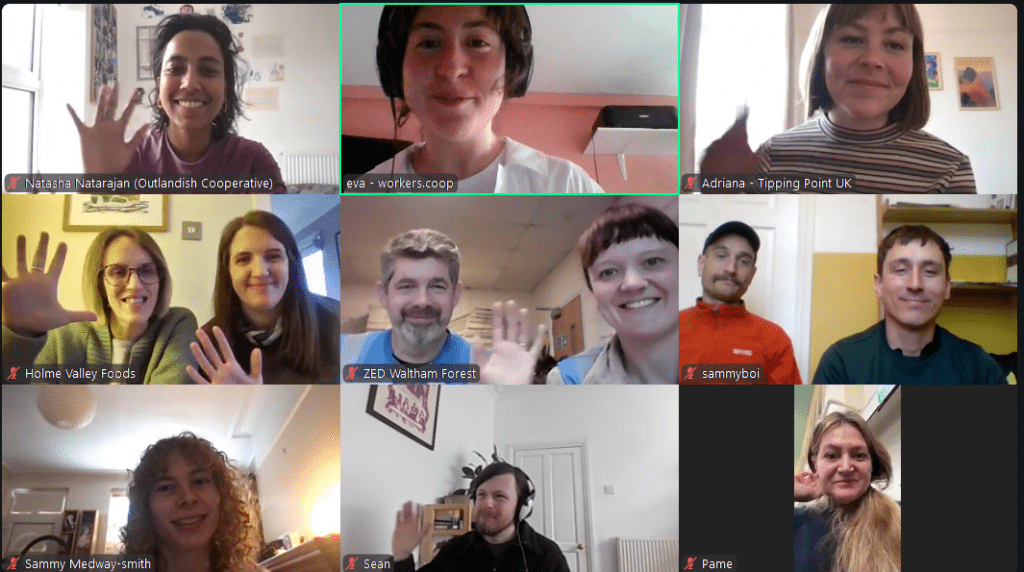
The programme steering group is made up of Adriana Swain and Clara Paillard (Tipping Point), Natasha Natarajan (Outlandish/Space4), who is leading on the accelerator bit of the programme, Gemma Copeland (Common Knowledge, board of workers.coop), Sean Farmelo (BBF, board of workers.coop), Sam Nordland (workers.coop), and Eva Goudouneix, the project co-ordinator.

Why an accelerator programme?

One of the goals as a federation is to support and develop new worker co-ops, and make the system of worker ownership more accessible to a wider range of people.

At the same time, many of us recognise a role for worker co-operatives in the transition to a less extractive and fairer economy. We are head deep in a climate emergency, and worker co-ops are a possible pathway to more just and ecological forms of economic ‘growth’ that are based on alternative forms of value, and that place importance and care on other things such as worker well-being, community and wider environment.

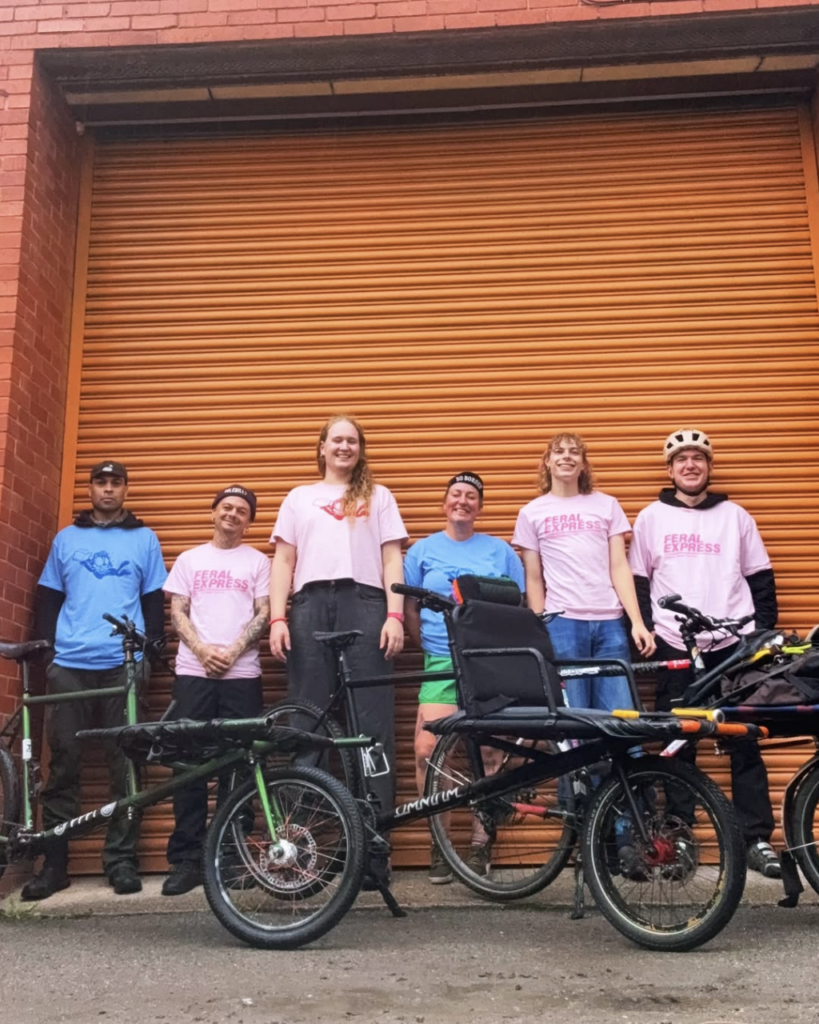
Feral Express bike courier co-op, Sheffield.

Worker co-ops don’t just embody deeper commitments to environmental and ecological principles, but moving towards a new economy needs to revolve around an organised workforce who have democratic ownership over what they do and are producing socially useful good and services.

In contrast to the wide support that exists for traditional start up businesses, there is a well-known lack of co-operative specific support. If worker ownership is going to be an answer it’s clear to us that we need to scale up the number of new or converting worker co-ops. We know the skills, experience and know-how to develop more democratically owned businesses for a more circular, and fair economy exist. But there is a missing funding link between the provision of skills and the demand for support.

There are very few co-op business support programmes out there, one of the main ones being Co-operatives UK’s Business Support Programme (funded by the Co-op Bank), but generally speaking co-operative business development is desperately underfunded. When support work is delivered, it’s often for a limited time or limited scope, is temporal or focused around start-up or a particular issue.

For example, this Spring a specialist training programme for co-operative practitioners, the Barefoot co-operative business training, temporarily paused its next cohort due to lack of funding. What’s more, we have yet to see an evidencing of support and packages for the sector from the government’s pledge to double the size of the co-op sector.

The Own The Future programme is made possible because of sustainable future funding from JRCT. A programme of this length and size would always require external funding alongside the activities of the federation, which are themselves resourced through membership income from worker co-ops across Wales, England and Scotland.

ZED Waltham Forest, London, carry out bike couriering and work with the local council.

How was the accelerator programme designed?

When starting a new business as a worker co-operative, the onus is on individuals or groups to find information, follow steps and work things out, which can be daunting and isolating. Who is able to start a new business is dependent on who has access to resources, free time, money, skills, and able to carry out free work at the beginning to set things up or acquire new skills.

While still a pilot project on a small scale, Own The Future makes a start at addressing these barriers in the way it is designed. Core to the programme is the provision of start-up funding. Each group receives £5,000 start-up funding, which can cover things like new equipment or paying for co-op business support.

There is additional budget to cover costs associated with attending events, often crucial for networking, marketing, peer support and to provide the social aspects like celebration, core to success!

The demographic makeup of each co-op was considered as part of the cohort selection. Thought was given to which trades or activities are less represented in the worker co-op movement, such as tree surgery or childcare, alongside other considerations such as business viability.

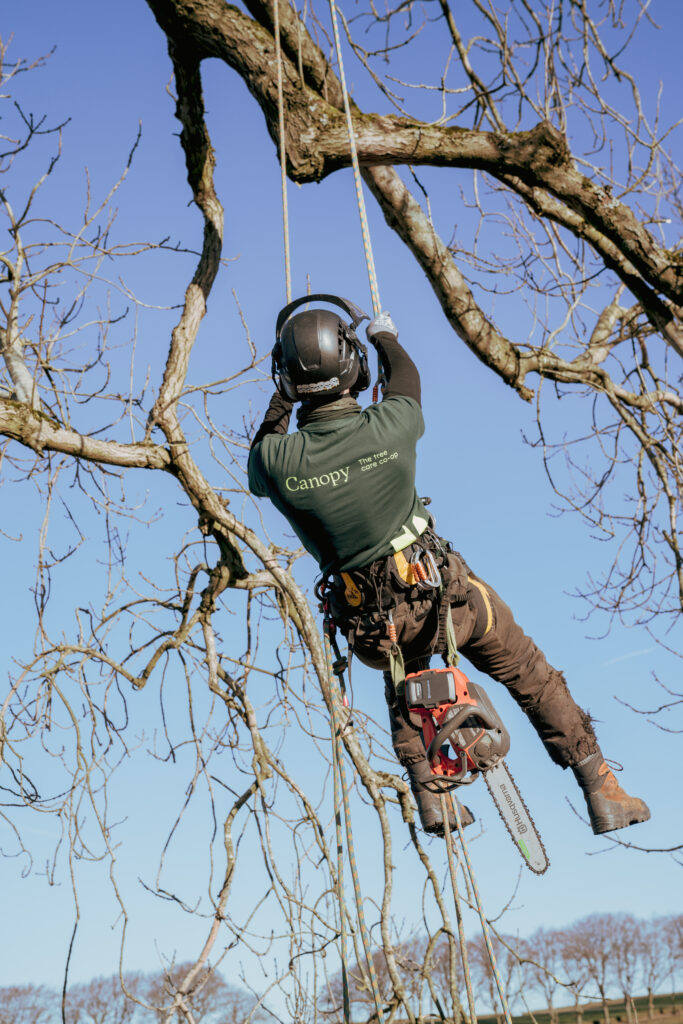
Canopy Co-op, Sheffield, are a tree surgery firm made up of three members who carry out tree maintenance as well as other ecological activities.

There are many benefits to designing the support programme as a longer-term accelerator, where support that co-ops receive is situated within a group setting. A peer learning environment is where people can learn together, share insights and help each other out, based on mutual support and collaboration much like working as part of a co-operative.

Rather than seeing the cohort as five separate groups, the members come together through online meetings where they meet each other, and can share common challenges and solutions, and feel part of something bigger.

In addition, through the federation of worker co-ops, they area linked up to other existing co-op businesses in their field, and have the chance to meet peers working in similar sectors or who have been through their own process of start-up, at events in-person and online.

The abundance of freely available support and advice from well-meaning peers in the sector is one of the factors that makes worker co-ops as a model so strong, and more likely than traditional business models to succeed past the five year mark.

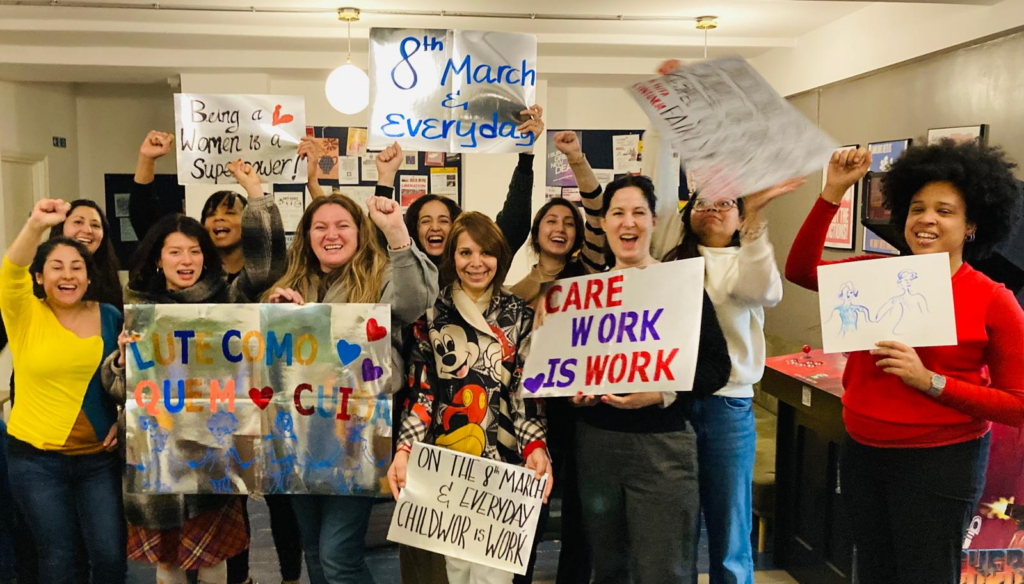
Nanny Solidarity Network, London, are forming a childcare co-operative.

The support takes place over a longer period of one year, making it comprehensive but also allowing it to be iterative and responsive to the groups needs’ and experiences of start-up. This follows the pace of setting up a new business, which often pans out over a longer period of time, with mentorship and development along the way, rather than all at once at the start.

Participants benefit from learning from a range of professionals and organisations, rather than working with one advisor. The groups are assigned a mentor, who are involved in worker co-ops, and take part in training identified as areas of need early on. They also receive specialist training from a range of experts after their needs are identified, with a budget of £1000 to spend on business support. The federation feels like a natural home and a strong base for this type of support programme.

Instead of a one-size-fits all approach, the accelerator has been designed in a way that is tailored, and based on an iterative process where a mentor works with a group and the funding and support is based around that particular groups’ needs, in recognition that different groups will have varying needs on a programme like this.

50+ applications received

When we opened applications in December 2025, we were blown away by the level of demand we received: 50 expressions of interest and dozens of people who attended the drop-in Q&As, and this was just for worker co-ops.

Cohort selection was very challenging because so many of the 26 full applications received met the criteria for a viable or already evidenced business. The final cohort of five groups was selected based on a range of ready-to-go viable ideas, geographical location, sector, and those considered most able to benefit from the type of support the programme is able to offer. 

We know the demand for this type of support exists and is desperately needed, and we are excited about the future possibilities of how we can build on this.

Welcoming the participants

So far, groups have taken part in training sessions on People & Culture and Marketing & Communications, alongside one-to-one sessions with their mentors – Natasha (Outlandish), Adriana (Tipping Point), and Eva (workers.coop). The mentoring sessions help each group clarify their goals and challenges, and figure out the use of their start-up funding and specialist advice budgets.

Each group is progressing in ways that reflect their context: ZED Waltham Forest and Feral Express are researching how other cargo bike couriers operate, Nanny Solidarity Network is developing their internal structure, Canopy Coop are embedding sociocratic processes into their ways of working, and Valley Roots are working on all fronts to get their business up and running – from digital platform to partnerships with high street vendors. 

What do we mean by ‘just transition’?

We use the term Just Transition which is a framework imagining and building a different kind of economy. It calls for a shift from an extractive economy – driven by consumerism, resource extraction, exploitation, and concentration of wealth and power – towards a regenerative economy grounded in care, cooperation, and ecological and social wellbeing.

Feral Express, a bike courier co-op in Sheffield, deliver items across the city replacing the need for motorised vehicles.

Worker cooperatives can play a major role in this transition because they change who owns and controls economic activity. Decision-making power is taken away from distant shareholders and big corporations, and instead given to workers, who have an interest in addressing the issues caused by the extractive economies we live in – cost of living crisis, low-quality work, lack of public investment, breakdown of social ties and so on.

Worker cooperatives encourage local, circular economic practices, and create high-quality jobs to do work we actually need. They are more resilient in the face of crises, prioritise wellbeing and solidarity, and give a voice and power to those who have been most disadvantaged by the current system.

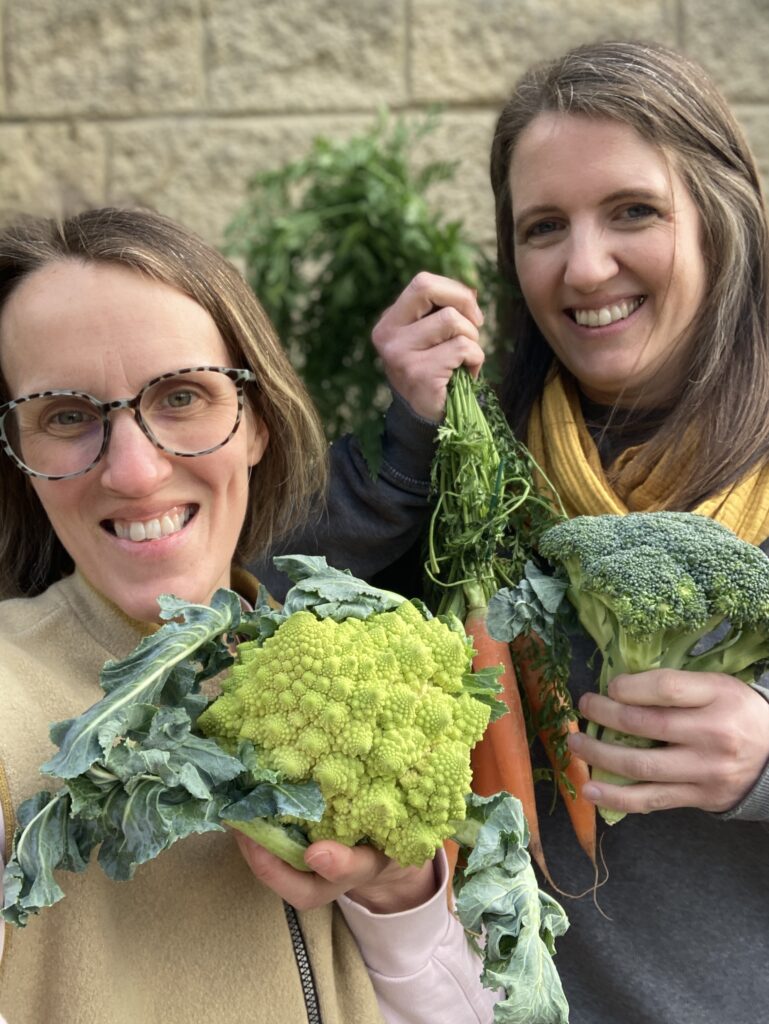
Valley Roots, located in the Holme Valley in Yorkshire, have formed a co-op business to help link up food produce with local people.

What’s next?

We are now about half way through the accelerator programme and have just passed the milestone of meeting in person for the first time at Worker Co-op Weekend. The cohort received training in decision-making and sociocracy, putting the theory to use by using the training to make a decision at the end of the weekend.

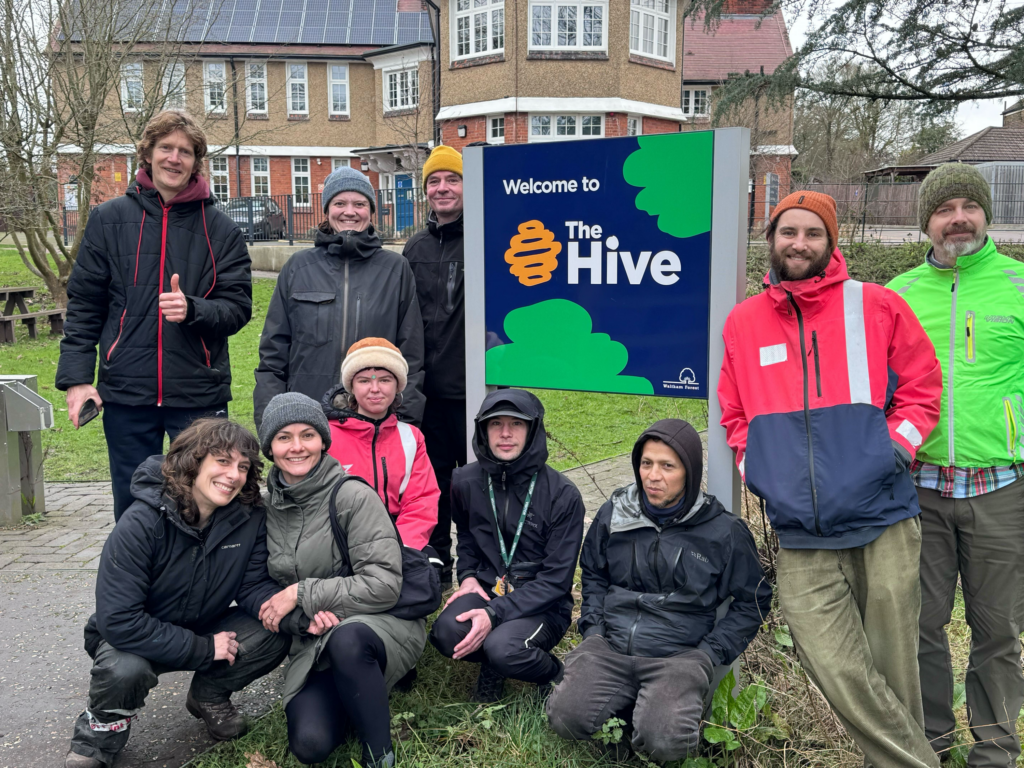
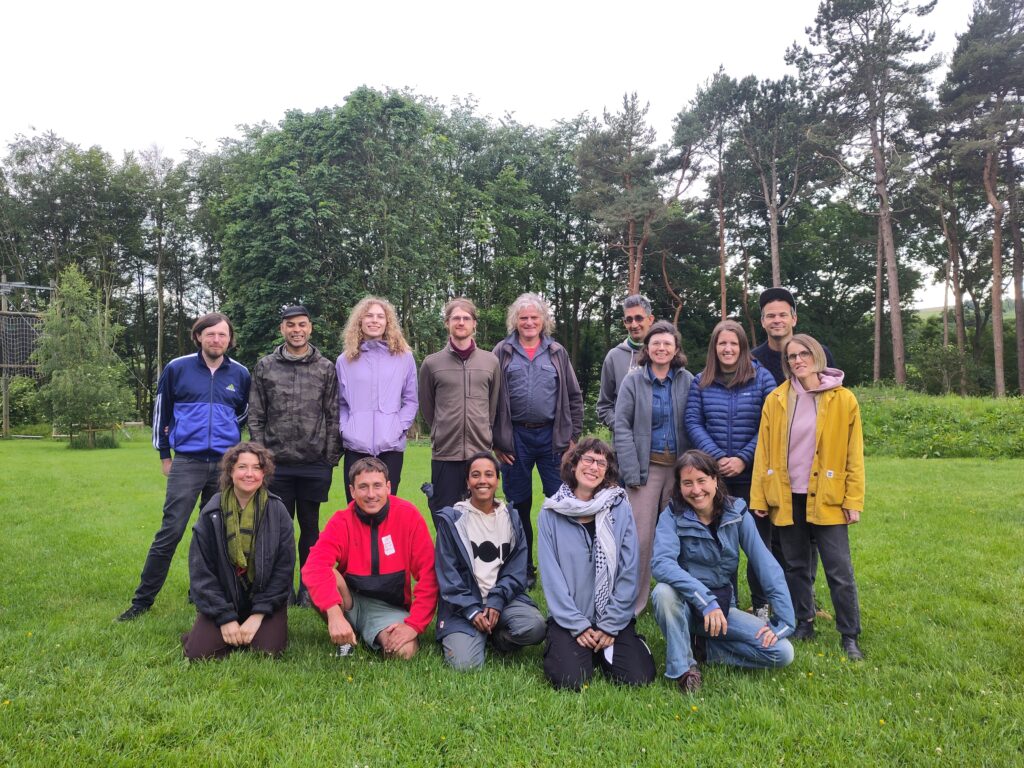
The Own The Future cohort at the Worker Co-op Weekend, June 2026.

Development looks different for each group as the learning process is iterative and respondant to the groups’ needs, rather than taking a one-size-fits-all approach.

The benefits of the accelerator being embedded within the worker co-op movement is the abundance of advice, shared knowledge & skills, collaborative tools and templates, and generosity; an approach which is open and based on mutual aid and cooperation, rather than competition. 

Own The Future is a programme of support for worker co-ops that’s also articulated as a response to the climate crisis and as a way forwards in building the types of economies we want to see, with workers leading the way.

Press inquiries to ownthefuture@workers.coop.

In partnership with:

Outlandish/Space4, Tipping Point, Joseph Rowntree Foundation, Common Knowledge, workers.coop

Run by Humans: Adam

This article is being reproduced on the workers.coop News page with permission of Suma Wholefoods who originally posted this article here on 13/04/2026. Thanks to Suma for permission to reproduce this article.

This is an interview with Adam from Suma who sits on the board of workers.coop.

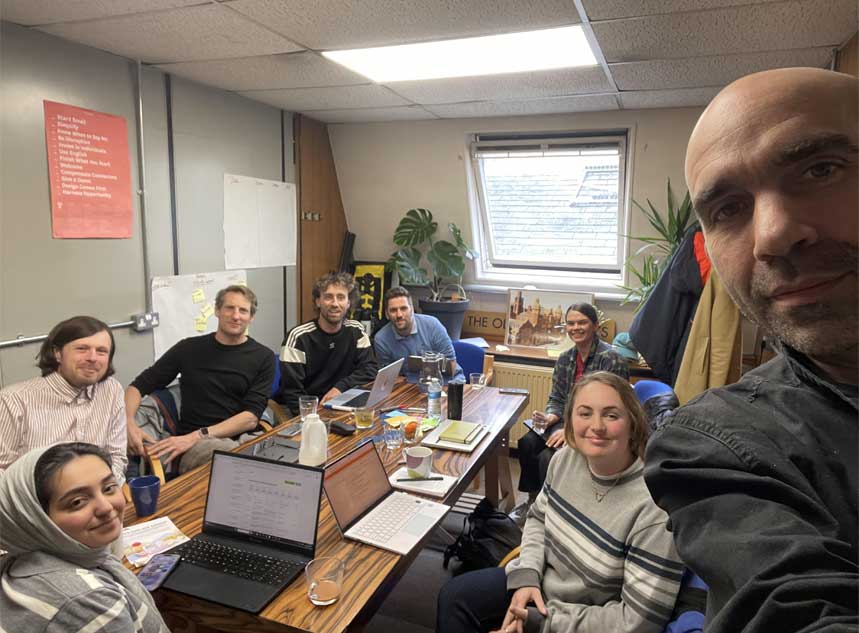
Image showing workers.coop members at the end of March during the in-person board day.

You’ve just done almost 9 years on Suma’s Board. How Suma has changed during that time, and how has that experience shaped you?


This is defo a good question, so often when you’re locked into the moment you kind of get caught up and sometimes a bit tired – when you look back over a longer period of time it really makes an impression. A massive event that kind of warps all of our recollection of recent years is COVID, the worry about how to make sure we could continue safely was a such a massive pressure, we really reacted well to all of the associated challenges of the COVID 19 pandemic. Suma’s Board came into existence a couple of years before that time, in 2018. All of us who were on the Management Committee continued onto the board, our responsibilities didn’t really change but the organisation governance was challenged with new reporting and operational responsibilities. Those changes positioned Suma really well to plan and actually react to the pandemic. In the last few years since the pandemic, we’ve appointed more expertise to our leadership team and focused more on planning, especially in terms of the sustainability of our co-op.

In some ways Suma hasn’t changed much, but whenever I speak to people outside our co-op and tell them that we all get the same hourly wage it’s so, so radical that I don’t really get much else reflected back. I’m certain that our Members Council is maturing into a representational body that will help workers collective views be heard and discussed for many years to come- what a great thing to have!

What made you want to put yourself forward for the workers.coop board?


I was ready for a bit of change, interested in worker co-ops, and had fun attending worker co-op weekends and the autumn assembly. So I was keen to do something representing Suma in our wider movement.

From being on the Suma board, are there perspectives you’ll carry into this new position?


Of course, although it’s hard to say exactly what, having only attended a couple of meetings so far, it is still quite early days.

Are there particular challenges at Suma that you think have prepared you for the board at workers.coop?


Yes, finding old and different ways to make decisions, some of our traditions are so important, like one member one vote.

What excites you most about wokers.coop’s purpose, and where do you think it can make the biggest difference for worker co-ops in the UK?


Providing services, support and advice how to set up and run a worker coop. Or, as another worker co-op board member put it recently – hope. We’ve so many challenges in the UK at the moment, setting up and thriving as a worker coop is possible but takes guts and resilience.

What would you most like workers.coop to achieve, and where do you hope to focus your energy?


I’d like to continue to build on all the great work that’s been done so far, building a resilient federation of worker co-ops which supports people across the UK to set up and run profitable worker co-ops, with links internationally to many of the other similar federations

What does “liberating work” actually mean to you in day-to-day practice?


It is an opportunity for us to get our head up and scan the field – look for the through ball or opportunity – a different way to play the game of work and be organised in our business.

We’re hiring a Business Operations and Movement Building Coordinator

Business Operations and Movement Building Coordinator

Salary: £36,000-£38,000 FTE, dependent on desired benefits package.
Location: Remote (UK only)
Contract: Part-time employee – 3 days per week (24 hours) with flexible working options

About us

Workers.coop is a grass-roots, member-led federation of worker co-operatives, individual cooperators and supporters across the UK.

Our mission is to strengthen worker ownership as a foundation for economic democracy, fairness, and sustainability. We connect, represent, and support worker co-ops and those who want to start or convert to them.

We currently have over 100 enterprise and individual members, two part-time staff roles, and an active Board and working group network. We work remotely, using open digital tools, and encourage participation from every part of the movement.

About the role

We’re looking for a strategic organiser and collaborator to strengthen our democratic processes, collective leadership, and visibility as a movement.

In this role, you will work with the Board of Directors, working groups, members, and other stakeholders to turn the worker.coop’s strategy and business plan into reality. You will focus on strengthening workers.coop’s democratic processes, collective leadership, and strategic influence by mobilising members, enabling effective collaboration, and cultivating alliances within and beyond the worker co-operative movement. Workers.coop is a grass-roots and democratic member-led organisation. In line with this, you will support and enable Enterprise Members, Worker Members and Supporters to initiate and take actions on things that they are passionate about. 

Alongside this, you will working closely with the Business Operations and Cooperative Support and Development Coordinator to co-deliver day-to-day business operations work, applying a high level of organisation to ensure the smooth running of events, meetings and people coordination.

This is a varied role that combines coordination, relationship-building, and practical systems work. You will help us to sustain the energy of a growing movement, support member initiatives, and connect worker co-ops across the UK. 

A full job description can be found here.

What you’ll be doing

  • Working with the Board and working groups to deliver the federation’s strategy and business plan.
  • Ensuring smooth internal operations through diligently co-managing workers.coop systems and processes.
  • Strengthening our democratic and participatory systems so members can actively shape the federation.
  • Supporting onboarding and induction for new members and volunteers.
  • Coordinating the Movement Building Strategic Group, supporting peer learning, mentoring, local meet-ups and other projects that meet the needs of current and prospective members.
  • Helping to design and deliver our two major annual events: Worker Co-op Weekend and the Autumn Assembly.
  • Forging alliances with aligned organisations and representing workers.coop externally.
Required attributes
  • Experience of worker cooperatives or similar democratically run organisation.
  • Well developed understanding of the benefits, challenges and complexities of democratic organising.
  • Experienced self-organiser, with well developed skills in time-management and goal setting, and an ability to self-motivate.
  • A good problem-solver, with the ability to use initiative, reflect on past successes / challenges, and seek advice from others when needed.
  • Ability to link daily tasks to long-term organisational goals and anticipate future challenges, risks, and opportunities. 
  • Experienced collaborator with well developed communication skills, and the ability to resolve conflict and respond to the diverse needs and perspectives of others.
  • Excellent communicator and facilitator, able to engage confidently with people online and in person.
Desirable attributes
  • Understanding of cooperative values and principles, and how these apply in the context of a worker cooperative.
  • Experience coordinating volunteers.
  • Experience of organising and/or managing events or campaigns.
  • Experience of facilitating meetings.
  • Familiarity with CRM and online collaboration tools (e.g. Open Office, shared inboxes).

Benefits

  • Competitive salary
  • Flexible working hours and location (fully remote, within the UK)
  • Ability to shape organisational culture and the policies and practices that will affect you
  • Opportunity to tailor benefits around your needs
  • Supportive, democratic working culture with space for personal development
  • Opportunity to shape the growth of the UK’s worker co-op movement
  • Pension contributions in line with our policy

How to apply

We have developed a CV-less application process designed to make the opportunity as accessible as possible. The application process will involve the following:

Stage 1: Application

You will be asked to answer a series of questions that assess your experience, skills and knowledge against the required attributes. Questions will be answered via a NextCloud form (alternative to Google forms).

The deadline for applications is 5pm on 12th January 2026.

We advise that write your answers in a savable document, and copy and paste them into the NextCloud form when you are ready to submit.

If you have any problems accessing the application form, please email ppc@workers.coop

Stage 2: Shortlisting

Applications will be anonymised and shortlisted. While we originally intended to let shortlisted applicants know by 14 January, due to the high volume of applications received we have been slightly delayed and we aim to let shortlisted candidates know by the end of the week (16th Jan). Please wait to hear from us.

Stage 3: Task and interview

Shortlisted applicants will be invited to an interview. The provisional date for interviews is 21st January 2026.

In preparation for the interview, you will be asked to complete a short task that reflects the kind of work you will be required to do in the role. We will compensate you for your time on this task.

During the interview you will be required to present this task, and will be asked a series of questions that will further assess your experience, skills and knowledge against the required attributes.

Information about the task, together with the interview questions will be shared with shortlisted candidates.

Questions

Can I job-share?
We’re open to this — please indicate your preference in your application.

Can people outside of the UK apply for this role?
No. We need someone that is able to regularly travel and meet with members face to face in the UK.

Applicants must have the right to work in the UK.

Is there an office space?
No, but if this is something that you need we can discuss options with you. We have a budget to enable employees to meet in-person, and we hold in-person gatherings several times a year and cover travel costs for required attendance.

If you have further questions you can email ppc@workers.coop. Please bear in mind that this inbox is checked part-time and will not be monitored over the Christmas period.

Further questions and support

If you have any questions about the job or application process, or you need us to make adjustments to the application process to support you to apply, please email ppc@workers.coop. Please note that this inbox won’t be monitored between 22nd December and 4th January.

T-shirt contest voting 📣👕

Archived 3 October 2024

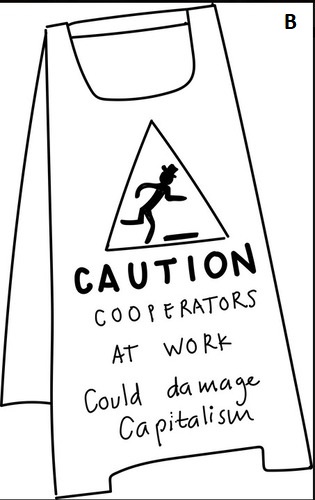
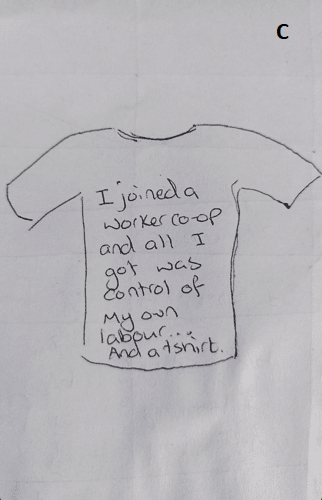
And the winner is… The voting was close but design C (I joined a worker co-op and all I got was…) came out as the design with the most votes, with one more vote than the two designs in equal second place, design B and D! We will be sharing the mocked-up final version soon…

Vote on your favourite t-shirt design!

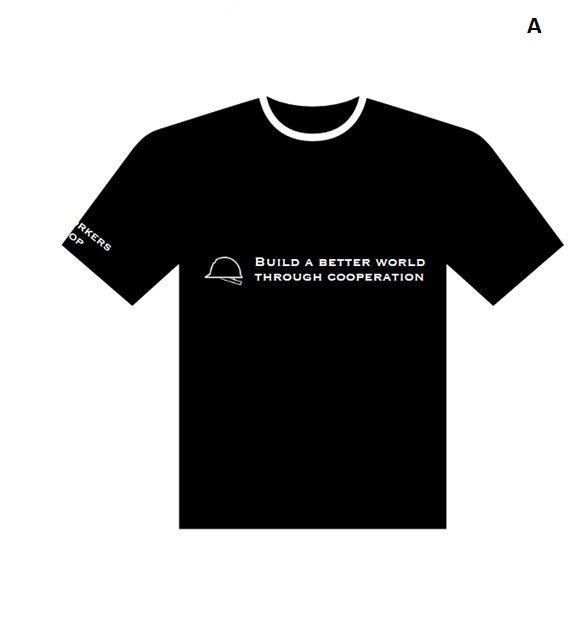
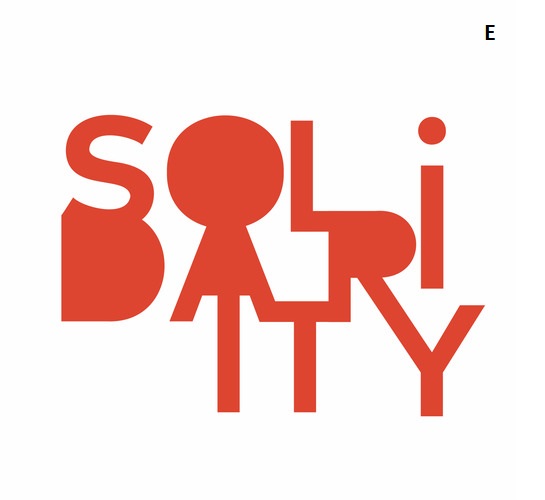
During Co-op Fortnight workers.coop launched a t-shirt design competition. The time has come to vote on the design you want to see on a t-shirt.

The designs represent the theme of worker co-operation and the winning design will be printed on No Sweat t-shirts. Thanks so much to everyone who submitted designs!

Who can vote?

Anyone can vote on a design. Votes are by individuals so multiple members of the same co-op can vote. Voting closes on the 9th September!

Scroll down for designs and to vote ⬇️

Designs to choose from

The following submissions have been shortlisted for the vote. Scroll across to view all 6 designs.

Please note that these are not final designs that will be printed, as some of the submissions are more worked up than others. Just vote on the idea that you like best.

Update mid-September: Voting has now closed. The winner will be announced in due course.

And the winner is… The voting was close but design C (I joined a worker co-op and all I got was…) came out as the design with the most votes, with one more vote than the two designs in equal second place, design B and D! We will be sharing the mocked-up final version soon…